Showing posts with label rambling. Show all posts

Wednesday, November 24, 2021

Happy Thanksgiving

Whenever I pop on to talk lately I lose the words. So much happening that days of talking would still leave massive gaps, so I won't. A few hours early, but I'm so thankful for the roommate I have, a pantry full of food, a warm bed and blankets, a desk, and for the time I have.

It's been hard to get motivated or stay in a groove for more than a few minutes at a time, with everything going on I pushed aside my NaNoWriMo plans for a month along with the blog, PvE card game, and OSR zine projects. I'm still writing and designing, just not publishing.
 
Soon.

Friday, October 15, 2021

New Perspectives - The World Design of Flesh and Blood Part 2

This week I dug my heels in to inspect the so-called "Savage Lands" of Rathe, continuing from where I left off.

While they are savage, and in spite of how much I love wild places and great fantasy art, the way the Savage Lands are presented in Welcome to Rathe is exhausting.

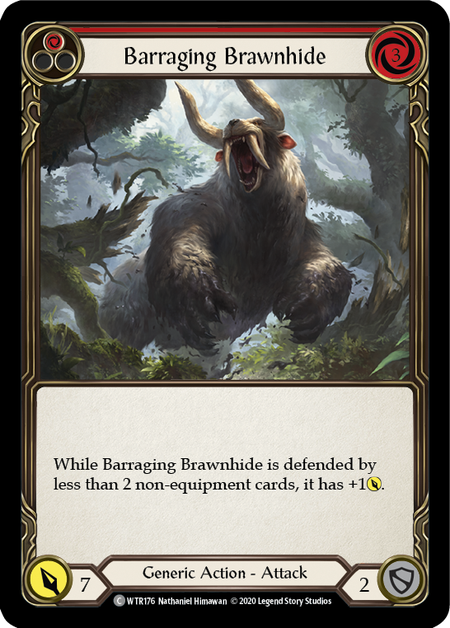
Barraging Brawnhide from Welcome to Rathe, art by Nathaniel Himawan.
One of the many savage creatures in the world of Rathe.

Thursday, October 14, 2021

In Case You Missed It...

If you didn't see, I relaunched my Patreon page after a two-year break.

Recently I've been getting into Flesh and Blood TCG as a hobby, writing for myself about learning the game as well as thinking about the setting, Rathe, and making a tabletop adventure for the card game. So far, all of that has been on my blog here.

Over the next few weeks I'll be deciding where to continue posting my usual blog articles, whether I'll keep everything here on Blogspot or put them on both Patreon and Blogspot.

Either way, I'll be posting some previews and shorter ideas in Patron-only posts to fill time and maintain momentum between regular articles and bigger projects like OSR zines (Mork Borg), adventure paths (Eberron and Ravnica being my current favorite settings to write for, and Numenera and Asunder close behind), and of course anything related to my current focus on playing and learning Flesh and Blood TCG and designing a multiplayer campaign for that game (think a WoWTCG Raid Deck but with multiple chapters and a story).

I have a lot of ideas (tiny and colossal), and plans for most of them. So, for now I'll keep doing what I'm doing and see how far everything takes off.

Welcome, and thanks for reading! GLHF!

Tuesday, October 12, 2021

Welcome to Rathe - The World Design of Flesh and Blood Part 1

After playing Flesh and Blood TCG casually for a few months and failing to find a local playgroup two weeks in a row, I finally sat down to read Flesh and Blood: Welcome to Rathe in preparation for writing a campaign.

Excitement. That's what I've felt a lot of in the past few weeks as I've gotten into Flesh and Blood. Some of it is from having a new hobby to replace those that I've lost over the years. Most of it, I think, is from the design of the game, the art, and a handful of people I enjoy watching explore the game. I love seeing potential in things, and this IP and the studio of people behind it have a lot of potential.

Trading Card Games are an incredible medium for bringing people together. Their unifying force transcends age, race, religion, gender, and even social status, through a common language of "playing great games."
—
Flesh and Blood: Welcome to Rathe, Legend Story Studios

These are the first words you see when you open the cover. I agree with them, deeply. Yet, after reading the rest of the book, I feel that some aspects of the world do not align well with that message.

That isn't to say I disliked the book, or its writing and information, or its art. I enjoyed all of those things, and I am still enthusiastic about Flesh and Blood as a game, and about its world—and creating spaces within that world for my own (and potentially others') enjoyment—because of its potential.

I love planting seeds and growing plants of all kinds, literally and figuratively. I view each of my worldbuilding projects in much the same way as I view gardening and taking care of my own and others' plants. Or, in this case, more like a large yard and all of its grass, trees, and shrubs, and potential gardens and visiting animals.
    This series is going to be about me digging into the setting of Flesh and Blood as it has been presented so far by Legend Story Studios, finding seeds (ideas) that interest me, and growing (developing) them into something I can use to create my own story and characters around.

Eventually (whether or not I find other people who are interested and willing to be emotionally invested) this will culminate as a homebrew adventure series that can be played by using print-and-play documents or Tabletop Simulator.
    As a matter of fact, I already have a prologue adventure primed for playtesting, and the fair draft of my story outline and chapters are ready for further development. But first I'd like to learn more; ideally, everything I make for this project would merge with and expand on the existing setting and story threads with fewer seams and smaller voids, just as I want my homebrew game design to work with the existing systems, mechanics, and overall design of the official game.

Saturday, October 9, 2021

First Steps - Flesh and Blood Sealed Deck #2

Yesterday I played my second FAB Sealed Deck event online in preparation for another in-person event this weekend.

Aside from organizing a few games online and playing over webcams in Discord while everyone is busy and/or my body aches too much to play in person, not much has been going on. A little packing, moving boxes an hour's drive away, installing doors, having a moderately stressful (mostly physically) time caregiving throughout the week.

I realized while sleeving my deck last weekend that I should have brought a playmat to make things easier, and remembered this one I love from Theros in Magic: The Gathering.
It's magnificent on its own, of course, but even more wonderful having unearthed it after so long, setting
Tales of Aria cards around it, and taking a moment to appreciate all the art.

I organized my gradually-thinning workspace and materials, my self, and my thoughts in preparation for getting over upcoming anxiety hurdles (game-related and life-related). Then further prepared to play and compete by reviewing rules and thumbing through my previous pool and blog post to re-familiarize myself with everything.

Finally it was time to open more booster packs, still thankful that I can do so.

Sunday, October 3, 2021

First Steps - Flesh and Blood Weekend Event

Last night I went to my local game store to play Flesh and Blood.

After getting a box of Tales of Aria, then playing Sealed Deck online, I was excited to make time over the weekend to get out of the house and play a few matches in person. To prepare, I rummaged around for a messenger bag and an old World of Warcraft TCG starter deck box to carry around my sealed pool and Briar blitz deck with some old Ultra Pro "Vizkopa Guildmage" sleeves, plus the other two Tales of Aria blitz decks in case the store didn't have any welcome decks.

I also took an hour earlier in the day before my afternoon work to review my sealed games, look over the rules again (I'm getting familiar with the basics but not the details just yet), and do a little fussing with my deck. I wanted to be able to stand my ground against someone with a more competitive constructed deck but still be able to play against new players and the other blitz decks, so all I did was replace a couple of cards in the pre-constructed Briar deck that weren't exciting, then designate a chunk of the rest of my sealed pool as "sideboard" cards.

That afternoon I ended up caregiving for an hour longer than I expected, mostly having a long, meandering conversation about some important things we need to keep in mind and answering good questions. Usually this isn't a burden, and wasn't stressful on its own, but it takes energy out of me and, this time, cut into the time I would have to change, pack, eat, and head over.
    When I got back home, I ended up getting nervous about the time I would have to re-sleeve and review my deck, and settle down and relax before the pairings started. So instead of taking half an hour to settle myself before driving to the store, I spent ten minutes running around and only getting a few munches of food in belly.

Once I was actually at the store, I saw that things were fairly slow with just a few people playing Magic (Commander) in the back and a few other people coming in to look around for a while (either casually "window shopping" or checking out singles for Magic and maybe some Pokemon cards). It was nice and very relaxed overall, and although there was a bit of noise it wasn't too distracting.
    One thing that helped was seeing exactly the brand and types of deck boxes and card sleeves I wanted to get (GameGenic box, KMC Perfect Fit inner sleeves, and Dragon Shield clear matte sleeves), and learning they weren't too expensive.

Everything packed neatly away back at home.


Friday, October 1, 2021

First Steps - Flesh and Blood Sealed Deck

My experience learning the Flesh and Blood TCG by opening Tales of Aria booster packs to play Sealed Deck.

This month has been exciting for Flesh and Blood players, with the Calling tournament in Las Vegas, then pre-release and release weekend for Tales of Aria. And I missed all of it. But, thanks to the generosity of family, I was able to take a minute to make a little extra money last month, save most of that extra money, and buy a handful of booster packs.

Then I learned I had leftover store credit with an online retailer from when I must have been playing a lot of Modern in Magic: The Gathering some lifetimes ago, and was able to pay only a few dollars extra for a whole booster box.

My first booster box ever, and my first time buying a Flesh and Blood product.

Saturday, March 21, 2020

Far Sector #2


I have been up all night getting tangled in an ever-growing web of anxiety and uncertainty, and reading Far Sector #2 with a good "breakfast" seems perfect.

This issue begins with Lantern Mullein literally pulling up a chair (a Green Lantern construct) and speaking to the audience directly. She catches us up to current events before we cut to the place we left off in issue #1 and move into an energetic chase. But the high-energy action and tension is slowly released, and we are eased into a much more intimate look into each of the major characters and world throughout the rest of the book.

Far Sector #2 cover by Jamal Campbell

The worldbuilding we saw in issue 1 informed what the world is like and taught some of its history. However, now, we get to know what it is like to actually live in this world for the Nah and keh-Topli and Lantern Mullein, and form a better idea of what it might be like for us readers. The way we are given information is also contrasted with the first issue in that there is a lot of deeper storytelling happening in subtext alongside dialogue and Jo's monologues to us and herself. And there is still great, expressive, visual storytelling but on a smaller scale—from character interactions to flashback vignettes, everything is very intimate.

Lantern Mullein using her powers and encountering an obstacle during the chase


The themes of this issue are emotions, self-control, and imperfection, and they are expertly presented. Much of the monologue and dialogue can be taken at face value, such as when Jo talks to us directly or other characters talk plainly to her. But a lot of the writing and art requires us to read much deeper into the conversational subtext and contextual storytelling in the background, such as when Syzn or the keh-Topli Councillor describe themselves and the emotions (or suppression thereof) of themselves and others. We learn what Syzn thinks of Jo and her capabilities and emotional self-control; we understand the self doubt Jo has when she hears this, and Syzn's desires and self doubt. A lot of storytelling (specifically tone-setting) even happens purely with color, both classical color theory and cultural connections between emotions and colors, and Green Lantern-specific colors (especially in the last scene).

Syzn talking about the keh-Topli

In the last part of the issue we get a climactic realization about one of the characters. This section does a great job at cluing us into the shift in tone and foreshadowing events in the near future. The subtext is deceptively obvious in a way that lets us slip into the moment and feel positive emotions with Jo and another major character while also gradually increasing the tension of the scene without us knowing exactly what's happening until the final page when the tension peaks with the big twist, and the build up to that moment suddenly makes sense. This entire scene contrasts with the tone we feel and with the emotions that Jo and the other characters have felt so far, and that with the more intimately-explored themes leading here make this moment as strong as it is.

Overall, this issue is as fantastic as the first, but more mysterious and eerie in its tone. Whenever there is a sense of discovery it comes with questions, suspicions, a heavier feeling of ominous anticipation rather than the lighter feelings of wonder from before. "Refreshing" isn't quite the right word for it, but it feels like the comic is heading down a winding path, into a deeper, darker tunnel toward more danger and more questions. And, possibly, more and more big discoveries that will answer questions and make unknown elements of the world and its characters clearer for us—or not, as neo noir science-fantasy stories with horror themes can tend to do. I'm excited about the possibility of either happening.

Far Sector #2 impressed me just as much as the first issue and pulled me deeper into the story, not just with its storytelling methods but also with how it changed the pace and themes and tension-stretching. It is different than the first in a lot of ways but still possesses so many of the qualities I already loved about the world; characters (Jo, Syzn, the horror-themed keh-Topli), fashion, the classy maturity, the noir mystery vibes, everything. And ending with the twist that it did while leaving out some notable aspects and characters (the @At Councillor and Jo's ring weren't explored in this issue)—and possibly foreshadowing other things—certainly isn't curbing my hunger to read more.
   It is, however, curbing my hunger to play Android: Netrunner and consume everything Star Wars after getting a taste of Star Wars Jedi: Fallen Order earlier this week. And my impulse to create fan-made campaigns for those settings are shifting into impulses to make something for the world of Far Sector. It scratches so many itches for fantasy, horror, and sci-fi while making me crave more.

I do have one complaint about this issue, and it's that I hate how short the issues are. But that isn't exactly a terrible thing, is it?

Shout-out again to Amy Dallen and her book club—check out her enthusiastic discussion of this comic and a bit of Green Lantern lore with other fans of the book on Twitch here—and to the writer of Far Sector, N.K. Jemisin, and the artist, Jamal Campbell. Fingers crossed that I can make time for issue #3 soon. Until then, thanks, go read the comic if you haven't yet, and please, stay mindful and safe, everyone! Cheers!

Saturday, March 7, 2020

Far Sector #1

Because of Amy Dallen's book club (watch the vod here, spoilers be warned) I was sparked to finally start reading Far Sector #1 by N.K. Jemisin and Jamal Campbell. I had the comic on my wishlist since it released November 13, 2019, and was so excited to nerd out after reading it.

Far Sector #1 cover by Jamal Campbell

"The first murder in five hundred-ish years..." —Sojourner Mullein

Green Lantern Sojourner "Jo" Mullein. Style, mood, smart and mysterious. She's a rookie galactic investigator embarking on her first mission with very little experience in "in the field," let alone in this alien setting, and I absolutely love her writing and design so far. She is our mundane, real-world familiar anchor who is immensely engaging with her voice and attitude toward others, the world, and to herself. There are plenty of unanswered questions about Jo; the teases that we get about Jo's past contrast with the more raw and plentiful information we're given about the world and the immediate situation Jo is in, which keeps us turning pages.

The City Enduring in the Far Sector. Simple premise, mixing of genres, sublime worldbuilding, excellent execution. The three humanoid species—the Nah, the @At, and the keh-Topli—and their very strong opinions and emotions are very distinct from and in opposition to each other and quickly become part of the puzzle for Jo. The world is very much science-fantasy, but the story itself is a neo-noir mystery with a new and unique visual buffet. It already feels like everything is serving to accentuate or complicate the story hook (murder mystery), or is here to present classic human problems in new, exaggerated ways (emotions, politics, crime).

If you like Batman: The Animated Series, Men in Black, Starfinder, Shadowrun, Blade Runner, Pulp Fiction, The X-Files, Hellboy, Firefly, Brick, Cloud Atlas, or everything Green Lantern, there's a good chance you will find something to love about Far Sector. Its rating is for ages 17+, which is warranted with a few scenes and the generally more mature tone; in this first issue there isn't much violence shown, only some in brief flashbacks and a few shots in the present of dead alien bodies (one partially seen, the other torn apart and in full view).

For more nerding out over all the elements of the comic, go check out that vod. For other things to read, one of Amy's viewers mentioned The Ballad of Halo Jones by Alan Moore and Ian Gibson, and the first quote of the comic is from Things Fall Apart by Chinua Achebe which Amy also recommends. The characters and story, aside from Jo being a Green Lantern, are entirely removed from the greater DC Universe and (so far) completely contained within itself. Everything you need to know about the world is taught to you in this first issue.

I love Far Sector so far and can't wait to further indulge in the beautiful verbal and visual storytelling.

Far Sector Soundtrack


When reading this comic, from the very first page, I couldn't help but imagine it as an animated show or a video game. And even without those moving mental images, a lot of songs fit some scenes so well that I had to make a list.

Opening song: Rihanna - Needed Me. Watching people at night, and witnessing broken pieces of events that led up to the murder, ending with seeing cast shadows or the edges of the aftermath of the crime where the comic starts. The sounds and beat of this song are a killer tone-setter for this tech noir story.

The City Enduring

Newcleus - Space is the Place. Parts of this song are playing when we first experience the city "dropping its presence" during the artificial sunrise, and the camera flies around to see the city and busy people in the morning for a breather before Jo gets back to work.

The "sunrise" over Platform Ever Forward

Grimes ft. Janelle Monáe - Venus Fly. I imagine something like this playing when we meet the Trilogy councilors. There are plenty of songs that have some techno-pop and Manic Pixie Dream Girl-ness, including a lot of K-pop and J-pop, but this keeps things close to the core tone of the comic than poppier, hyper songs.

Opening or closing credits: Seal - Fly Like an Eagle. Although it's more uplifting than the darker noir vibes, this song has so much that fits the futuristic, far-away world of the City Enduring.

Other must-have songs: something (anything at all) by Sade, something by Nujabes, the latter half of Beyoncé - All Night, Bomfunk MC's - Freestyler with its slow start and transition into dangerously-late-90s hip hop overload, samples from Beastie Boys - Intergalactic, and something by Deltron 3030, Zapp, and Fatboy Slim - Right Here, Right Now (or a modern song evoking it) for when anyone is ever is a nightclub or in a street chase at night. R. Kelly - I Believe I Can Fly. has to make it in somewhere, maybe everywhere.

So much generative ambient and synth music would also fit the world and tone, spanning from classic drum and bass electronic music and ska-adjacent and alternative hip hop, to the full-on synth sounds of Blade Runner, Terminator, Thief, and Escape from New York. The trippy vocals of Kavinsky - Nightcall would also be fitting, and Deckard's voice and mechanical clacks at the beginning of the Blade Runner Main Titles are an obvious inspiration for any scenes with Jo thinking to herself or speaking out loud to the viewer.

Maybe not in this first comic, but I suspect that any number of songs by Incubus, The Roots, and even Linkin Park will fit in at some point later on.

If any of that sounds interesting, go check out the comic! Thanks for stopping by. Cheers!

Tuesday, January 21, 2020

Diablo IV Wish List: New Classes

Since I saw the trailer for Diablo IV, the game has been ever-present, often at the back of my mind but lately at the front of it. Watching gameplay demos and listening to the developers and hearing the thoughts of other Diablo fans got me thinking more about various aspects of the game and, of course, all the possibilities that a new game could fulfill. For now, I'll keep my giant stack of notes and ideas and Diablo game design philosophy ramblings to myself, and will stick to presenting a few ideas I'd love to see in Diablo IV.

New Character Classes


Instead of a righteous, divine paladin or crusader type, I would love to see a grimmer, darker take on a priest or cleric archetype. They might be a fearful, lost pilgrim wandering Sanctuary, hanging dearly onto their last threads of life. Or, a stoic death-seeker following the dying religion of a two-faced god-hero of old. Perhaps they are a warrior poet of sorts, but one that only sings tragic tales of flawed and fallen heroes and false martyrs.
  Alternatively, they are a wounded fallen angel who has long since abandoned aspirations of ever fully healing—let alone re-ascension—and see their strive for a sense of purpose as folly, a sick joke they can't help but play on themselves.

A dirty-fighting urchin from a large city, a roguish scoundrel and grave robber who has been traveling around the world their entire life, or a former pirate lord who has forsaken their mutinous crew and seeks treasure in new parts of the world. Over time they might grow to become a great duelist or battlefield tactician, if they can resist their curse of greed.

An archaeologist-wizard who discovered an ancient power in the desert around their home. They left the desert to escape the horrors they witnessed, and look for other artifacts and lost knowledge that might bring peace to their mind, or at least occupy their curiosity (obsession) and give them short-term purpose in fighting demons. Perhaps they are instead an illusionist or psychic who summons living nightmares from their own mind and cripples the minds of others. Or, a warlock and servant of a distant star who calls unknowable things from the cosmos to Sanctuary.

A twist on the necromancer as a cunning and sneaky curse mage (witch/warlock) who isn't afraid to use their enemies' tactics and forbidden knowledge against them and actually relishes it. They aren't unfamiliar with old ways of healing thanks to their parents' teachings—their darker fascinations are thanks to their parents' supportiveness of their morbid curiosity as a child. Perhaps they are a child of a human and a fiend.

Instead of a monk or another fighter archetype, an opportunistic survivalist who has trained in multiple fighting styles/stances and the use of intricate traps and explosive devices. They might be a ranger specializing in two-weapon fighting, a scavenger who prefers to fight from afar, or a tamer of beasts that hungers for demonic flesh as much as themselves (figuratively or literally).

An old mystic with a greatsword possessed by their only surviving friend: a fiend wreathed in ever-burning, tortuous fire. Either the enchantress from Diablo 3, somehow still surviving and able to fight, or her child/grandchild carrying Maximus—the demon may have been transferred from the weapon to their mind and body. Or, a devout follower of a perverted faith based once upon a time on the life story, deeds, and teachings of the enchantress, and who is consumed by lunacy over time.

An artificial golem who woke up in a hermit's workshop or the depths of a sage's bizarre pocket dimension. They are either an engineer who augments their metallic body and the weapons and armor of their allies or devices they deploy, or an alchemist who concocts unstable potions and steals essence from their enemies to infuse into their alien heart.
  Alternatively, they are a mutant zombie alchemist who uses their bizarre infusions and skeletal grafts to keep their body alive and to turn it into a living weapon. Or, a rotting, resurrected agender mummy and former archivist-wizard whose cursed, shriveled, black heart-phylactery exudes strange energy, or a golemancer/lithomancer lich with an artificial black iron heart-phylactery. (They could also be the archaeologist described above.)

And no class would be complete without...


Legendary and Set Items


Druid: Permanent cursed/diseased-looking inhuman form, or all their transformations are extended and turns their focus to melee. A fey form emphasizing nature, death, and disease, or that of a dark dryad that makes them transform into beasts made of shifting plants that glow inside with eerie green light or swirl with dark shadows. Runestone armor crackling with electricity, with transformations of stone or pure lightning that call down lightning bolts.
Sorcerer: Blue-white armor made by unseelie fey that allows them to become an icy archon. A dress of fine, dark or light purple cloths and thorny silver jewelry inspired by insects, all infused with and oozing unseelie magic. A crown of elements that can be triggered by casting elements of one type, and summons a fiery skeleton, storm spirit, or ice banshee. Armor made from a butchered phoenix.
Barbarian: Patchwork, treated demon skins that fill them with demonic blood and fury when raging. Iron or stone golem weapon, or chest armor made of the belly of a smelter demon or forge of war. Bloodthorn dryad weapons. Runestone plate armor or barkskin and enchanted tattoos that turn them into a furiously growing storm while whirlwinding.
Cleric/Necromancer: A skeletal/phantom mage that can temporarily walk the realm of the dead. Armor that turns them into a white-hot skeleton bound in spiked black iron chains or welded into spiked, smoldering black plate armor. A veiled spirit or blood angel. The form of a vampire themed to a new place/culture in Sanctuary.
Whether or not any of these ideas are seen by the team, hopefully they can inspire you to make your own characters and classes and items for D&D, be it for a game of "D&Diablo" or other adventures in settings like Dark Sun, Ravnica, Planescape, Spelljammer, and Innistrad.

Thursday, January 2, 2020

Reminiscing: My Favorite Games of the Decade (2010-2019)

It's strange to think back on the past ten years, how long it's been, how many things have happened for better and worse, and all the people I've met and lost since I was sixteen years old in high school and driving my first run-down vehicle. The things that are easiest (or most comfortable) to think back on are all the games I've played and which ones have stuck with me in some way, and on cold lonely nights it's nice to reminisce on the games and all the people I played them with.

So, here are some of my favorite games of the past ten years, in no particular order for any list.

Top Ten Favorite Tabletop / Pen and Paper RPG Books


Dungeon World (Powered by the Apocalypse)
Fiasco
Guildmasters' Guide to Ravnica (Dungeons & Dragons 5th Edition)
Numenera
Kids on Bikes
Predation (Cypher System)
Blades in the Dark (Powered by the Apocalypse)
Weird Discoveries: Ten Instant Adventures for Numenera
Starfinder
Band of Blades (Forged in the Dark)

Honorable Mentions
Consent in Gaming (Monte Cook Games)
Mordenkainen's Tome of Foes (Dungeons & Dragons 5th Edition)
Shadows of Esteren
Symbaroum
Dragon Age RPG

Top Ten Favorite Video Games


The Witcher 3: Wild Hunt
StarCraft 2 (Wings of Liberty, Heart of the Swarm, Legacy of the Void)
Bloodborne
God of War (2018)
Spider-Man (2018)
Hellblade: Senua's Sacrifice
The Outer Worlds
Portal 2
Mortal Kombat X
The Legend of Zelda: Breath of the Wild
Ori and the Blind Forest
(actually eleven because cutting one of these is impossible)

Close to the Top

Dark Souls
Guilty Gear Xrd
Doom (2016)
Overcooked 1 and 2
Pokémon HeartGold/SoulSilver
Until Dawn

Honorable Mentions (too many good games to shorten)
Kingdom Hearts HD 2.5 Remix
Darkest Dungeon
Beyond: Two Souls
Batman: Arkham City
Middle-earth: Shadow of Mordor
The Witness
Terraria
Control
Metal Gear Rising: Revengeance
P.T.
Transistor
Pokémon (Black/White, Black/White 2)
Her Story
Killer Instinct
DmC: Devil May Cry
Resident Evil 2: Remake
Nidhogg
Fire Emblem: Awakening
Death Stranding
Sekiro: Shadows Die Twice
Super Smash Bros. Ultimate
Cuphead
Chivalry: Medieval Warfare
Shadow of the Colossus Remastered
Lost Planet 2
Darksiders 1 and 2
Final Fantasy XV
Age of Wonders: Planetfall
Call of Duty: Black Ops 1 and 2 (Zombies) and 4 (Blackout)
The Witcher 2: Assassins of Kings
Opus Magnum
The Last of Us
Titanfall 1 and 2
Metro: Last Light
Singularity
Bioshock Infinite
Dishonored 1 and 2
Gears of War 3
Bulletstorm
Apex Legends
Celeste
Papers, Please
Dragon Ball FighterZ
Risk of Rain
Diablo III and Reaper of Souls
Persona 5
The Banner Saga
XCOM 2
Evolve
Monster Hunter World
Rayman Legends
Guild Wars 2
Final Fantasy XII: The Zodiac Age
Crysis 2 and 3
Journey
Spyro Reignited Trilogy
Pathfinder: Kingmaker
Hyper Light Drifter
Resident Evil 7

Every single game here was impactful at the time I played them, from single player to cooperative and competitive to speedrunning. But the best ones captured my attention for a long time and had a deep, lasting impact on me as a gamer as well as a writer and game designer, and even as a teacher or mentor in some cases. There are a dozen tabletop and video games that could have been my favorite or close to it but that I didn't get a chance to play; here's hoping I can play a lot more this year in 2020 and throughout the rest of the next ten years. The next ten years... It feels like a lifetime.

Wednesday, October 16, 2019

Stress and My Creative Process

Stress. The last two months, for me, have felt like floating in a dull, endless ocean of stress.

At the end of last month, I felt a surge of desire and motivation to write and publish my own D&D adventure (Disturbance at Dusk, available on the DMs Guild). The idea for that adventure came from a lot of places, and the writing and encounters came from twisting some old adventures I made and creating lot of brand new pieces. Whenever I sat down at my tiny desk in my cold room in the week leading up October 1st, I had a lot of positive energy helping me drive myself and the writing forward, helping me progress, helping me come up with new ideas. In four days I wrote over 14,000 words, or about 3,500 a day—2,000 words a day is my goal on days I try to dedicate entirely to writing, and most of the time that writing isn't so completely focused on one story. Around 8,000 of those words made it into the final product, and I had so many other ideas that I never fleshed out and incorporated.

After spending one last day re-reading and editing and tweaking, I published it. It felt great. I immediately wanted to continue working on the next chapter of that adventure, and for a day I did. Then I realized how completely exhausted I was. I needed time to recharge, and I couldn't help but dwell on all the parts of the adventure that could have been better. So, I decided to take a few days off. In that time, my forward momentum stopped, as I expected from resting, relaxing, taking time away from the pen and paper and the keyboard and bright computer monitor. After that break, I wanted to get back into gear, build up that momentum and positive energy again, write and design more cool things for another adventure and have it ready to publish two weeks after my first (yesterday, at the time of publishing this blog post). But, life and stress got in the way.
  The positive energy and forward momentum I had a couple of weeks ago became negative energy and heavy, inert weight dragging me and my ability to create new things and put together ideas. The thoughts of "I can do this," and "this will be good" became "I can't do this," and "this will never work." And not just about writing another adventure. As the days of personal and family business continued, it also became about life in general and my ability to create anything. My desire to write and make is still high, but my ability to do so, my ability to lift the proverbial weight around my ankles and shoulders feels miserable. Now, it feels like I have no ability whatsoever to change anything around me, from being able to put words to paper (or monitor) to putting food on my own plate. It feels like this cycle, like it has countless times throughout my life, will never end.

Some things I know I am in control of, deep down I know I am, but the feeling that I'm not is unshakeable. Others I know I'm not in control of—getting a call back after applying for a new job, the weather cooperating as it gets colder, anything my family is doing or not doing, saddening (and maddening) world news—I know shouldn't feel bad for not being able to control, shouldn't feel as defeated as I do because I couldn't have changed it, but the more my mind dwells on it the worse it feels whether I want to think about it or not.

Being a creative person, to me, at least in this moment, seems to mean that life will be filled with the most vibrant, positive highs but also the most gray, negative lows. Things are rarely even-keel. And when they're at a point, it will never not feel like that low point will ever end, or never return.

For now, I will to do my best to keep moving forward, and have to trust in myself that I can reach another high point in the future full of forward momentum by slogging through the muck in the present.

Thanks for everyone who has purchased Disturbance at Dusk, reads this blog, and follows me on social media. Your mostly silent presence is strange, but nonetheless supportive and motivating.

Monday, September 16, 2019

Spicing up Ravnica: Mythology

Ravnica. One of my favorite settings in the Magic: The Gathering card game (along with a lot of other players and viewers), naturally because it is one of the best designed settings due to its sublime connection to the game's mechanics, as well as because of its fantastical, pseudo-modern setting and extremely colorful characters. The worldbuilding of Ravnica is fun, each guild is extremely flavorful, interesting, and all ten guilds are very distinct from each other in their own ways and provide a great amount of tools to use for storytelling. But digging deeper, beyond the interactions of the ten guilds in the Tenth District, there is a lot lacking. Certainly, there are some cards in each of the nine card sets that show and/or tell a little bit about what the setting is like outside the guilds, showing a few guildless characters and a handful of creatures roughly inspired by Ravnica's source material. But not much. Once you start asking questions about what life is like for the average citizen, or what other districts and entire cities outside the Tenth are like, you'll find a swath of unanswered questions.
  Reading some of the official short stories and novels may answer a few of those questions, but still not nearly enough. So, what I decided to do was to dive instead into the original inspiration for the setting to inspire my own stories and Dungeons & Dragons adventures: Slavic mythology.

Elements of Mythology: cultural and religious traditions, folk lore, and fairy tales.

In Slavic mythology, there are three defined genres:
  • Bylichka (beh-LEECH-kuh). Literally "tales." First- or second-hand accounts of strange, often paranormal or supernatural events or encounters with spirits that they experienced—typical tall tales with no real plot, but also some religious stories. Common tales are about someone getting lost in a forest and seeing something bizarre, children going missing and turning up years later saying or doing strange things before disappearing, or about meeting a revered house spirit or another fairy and making a deal with it which they must keep a secret for many years. Some of these sound like a child's stories about playing with an imaginary friend, pages torn out of Alice in Wonderland, or bizarre dreams (never so frightening to be a nightmare) apparently made real.
  • Skazka (SKAZ-kuh). Stories or fairy tales. Short stories and oral folk tales as a form of fictional entertainment involving magic and fantastical creatures, or about mundane daily life. Authors of current, well-known children's fairy tales were often inspired by these stories (such as Sleeping Beauty), and some stories have been adapted to modern times by replacing magical plot devices with scientific ones.
  • Bylina (beh-LEE-nuh). Epic oral poetry, sometimes called "stariny" (literally "stories of old"). In contrast to skazka, many of these bardic poems or songs would have originated from historical accounts that were then embellished with hyperbolic and fantastical elements over time, although there are some that are purely fictional. Many of the storytellers were/are illiterate singers, or, possibly, were simply dedicated to preserving their culture of the epic oral poems as it was understood that paraphrasing a story to anyone without performing the full song leaves out too much detail. Like modern singers and comedians, the particular stories they sang and many details about named locations or characters were improvised based on the current locations they were at and the company they were with.
      The structure of these poems is not unlike the structure of the hero's journey or a classic D&D adventure: a "bogatyr" (BOH-guh-TEER; mythic hero or character similar to a knight-errant) receives a task or rises to the call to action and encounters fantastical things on a long journey, and gets a reward of some kind at the end of it or upon returning home. Very rarely are sub-plots of any kind present; the story moves straight along from point A to B to C with a simple overarching conflict.

Of course, all of these elements bleed into and influence each other over many, many generations to create a vast, rich, epic tapestry.


Bylichka in Ravnica


Common tall tales and, for RPG players, adventure hooks or rumors to investigate and other places to discover and explore. But the rumors and missions all have a twist to them. Alternatively, read these tales and tweak and adapt them for weird, supernatural social encounters, puzzles, visions or dreams, and any other quirky, non-combat scenes.

Someone goes missing and a family member, partner, or close friend or coworker tells the hero(es) about what happened. It turns out later, however, that the events transpired decades ago and the person who told the story is actually a ghost in need of putting to rest. Or, that the events have yet to happen, and the person is befriended unknowingly (as they were wearing different garb or their face was obfuscated when first "met") and, days or months later, the strange series of events happen to the character who then becomes the missing person.
  Fey creatures from friendly pixies or malicious sprites to scheming hags always make for interesting scenes, especially when there is something the characters and the fey want from each other. Instead of talking in riddles or offering a trade of some kind, a faerie might give an ominous message or hand over a curious consumable with a clearly stated, positive effects and an obscure, abstracted warning of its negative side effects (if any warning is given at all).
  If there are choices the character can make, different paths to choose from, there should be some noticeable effect caused by their actions and not simply the illusion of choice. But whatever the situation, it is not one in which failure results in any severe or long-term consequences, if there even is a way to fail.


Skazka in Ravnica


With these, I mostly see monster encounters and acts in story. In any part of Ravnica, these fairy tales and brief stories can give hints and clues about what to expect from an adventure, or describe (possibly in a roundabout or convoluted way) how to negotiate with adversaries down the road or overcome malevolent spirits and monsters. Very likely, they are ominous tales the party overhears (or tells themselves) that foreshadow an upcoming encounter or greater adventure. Fairy tales of all kinds are ripe for picking apart and putting back together with all manner of changes and adaptations. They're also incredibly varied in how innocent and whimsical or bleak and gruesome they can be, and more innocent tales can easily be turned grisly and vice versa.
  When looking at a fairy tale to plug into your world—assuming that world is not meant to completely simulate a pre-existing real-world setting, culture, and mythology/religion—ask how it would look different in your world compared to the world it originated from. Most fairy tales are incredibly old and involve outdated places with outdated tools and technology and lack countless modern concepts. In Ravnica, a spirit might not be the housekeeper for one family but the manager for a whole apartment, or are employed by a high-ranking spirit or are working to pay off debts to the owner or a family long after the creature made a metaphysical pact with a now-dead relative. Faeries in a massive city don't just wear clothes made of leafs and sip nectar from flowers all day, they have suits or adventuring gear to wear and jobs or quests to complete for nobles, alchemists, spies, guildmasters, and so on. Merfolk, only recently discovered by the greater public, keep to themselves except when city projects and war threaten their homes—that, or they didn't exist at all until they were created by scientists looking to create new soldiers or evolve tools (gills and fins) for themselves so they can explore winding rivers, underground oceans, and drowned ruins, or they appeared suddenly after a catastrophic event that involved dozens (potentially thousands) of people drowning and returning as horrid, wailing sirens or amphibious zombies.
  There are so many fantastic fairy tales and creatures in Slavic mythology, and there is plenty of room for them in Ravnica, in the Tenth District and elsewhere in the world.


Bylina in Ravnica


In the Tenth District—the center of the most densely populated city of Ravnica (a name which the plane itself shares) and highest concentration of guild-related activity—the tradition of bylina storytelling with few or no instruments except the singer's voice is likely to have faded to a great degree, with it only remaining as the memory of the origins of modern songs, plays, and recorded albums, much like it has changed in the real world.
  Inside the Tenth, these songs are probably most commonly sang by Gruul clanspeople, with the most popular tales singing about the guild's parun, grand mountainscapes and storm clouds, and the great Raze-Boar god, Ilharg, who will bring about the apocalyptic End-Raze, after which the remaining Gruul members will celebrate and dance in the plane-wide ruins of the city. With the Gruul, these songs are always accompanied by dancers, a riot, or both. Rakdos guild members may have been the ones who took the tradition and transformed it into their well-known elaborate (and sometimes macabre) performances with music, dancing, acrobatics, and so forth, which modern operas and plays in the Tenth's theaters an jazz clubs could also originate from alongside the development of certain musical instruments.
  Outside the Tenth, in other cities and smaller towns or with nomadic tribes, traditional bylina is likely much more common. If one leaves the big city and visits a rubblebelt, underground river, forest, or any small settlement, they would undoubtedly find a group of people huddled around a campfire, inside a large hall (or tavern), or flocking to a rickety shelter where music can be heard with a bard singing epic tales. Families and factions in smaller towns likely preserve many of the traditions, telling stories about ancestors and heroic (or doomed) adventurers and their adversaries with one or two instruments providing distinctly background music. Subject matter ranges from fighting monsters to solving a catastrophic problem, removing an epic villain or oppressive guild from the region, or the history of how their ancestors relocated to or founded a long-overbuilt town after surviving a terrible war. At night or during bad weather in any region, dense and modern or sparse and traditional, parents sing poems to their children—parents who are guild members may try to impress on their children with songs of guild heroes, success and money (or a lack of them), or a clumsy character who failed at their task because they opposed the guild. Older siblings may choose to tell spooky stories to younger ones as opposed to heroic and cheerful tales, and embellish them with fantastically gruesome details. Hosts may stand and sing to their guests at breakfast or dinner, or will hire or ask someone else to sing at a gathering.
  Wherever you go, songs reflect the types of work people are doing and the specific struggles they have overcome in the past and are trying to overcome in the present and near-future. Newspapers, depending on the region, publisher, and writers, could start with a teaser poem on the front page with a longer story inside, and may be more popular when guild politics and tensions are high.


Bogatyr in Ravnica


Every culture has great heroes and tales of their epic deeds. Wherever the characters are, what are some local legends people tell in the district or neighborhood, who do people look up to? Perhaps some heroes have books written about them and kids desire collectible statues resembling a larger-than-life-size one in another city. What kinds of legendary heroes and ancestors do local families tell the children about? Are they tales of glory, or darker legends of fallen heroes and collapsed cities with moral lessons to be learned (or rebelled against)? In the guild that one of the player characters is a member of, whose footsteps do they strive to follow so they may bring glory to their guild? Does a prominent tale of an old hero have another side to it, or maybe it has been twisted by  notable members of a family or guild that opposed them—wrongly, justly, or entirely gray on all sides.
  Planeswalkers who visit Ravnica are bound to become legendary heroes or villains, and some may cause stories to form about mysterious, larger-than-life figures who travel beyond the nothingness outside the world's boundary—these are obviously absurd legends, of course, but epic nonetheless.
  Statues, memorials, and temples dedicated to legends in folktales and to heroes of times of war and strife are scattered across every part of each layer of each city, from the highest promenades to the murkiest, disintegrated depths of the Undercity. Tomes new and old talk about them with a different perspective or opinion on their deeds based on the time period and author(s). Old paintings, relief sculptures, and ancient relics show off their deeds, although archaeologists and scholars can never agree on who is pictured and what the symbolism was intended to mean at the time of their creation.

If there aren't any of these heroes and epic songs about their deeds that can be heard in the city (or just the apartment or bar down the street), the characters will change that soon enough.

Sunday, September 8, 2019

New Platforms

It's been a busy week, and I have a couple of new platforms! The first new platform is a Facebook page, a simple thing to reach more people who use that site instead of Twitter. Now, you can find my blog content here as usual, see blog posts linked on my Twitter page along with other posts, and you'll be able to find blog posts linked on the new Facebook page starting now.
The second new platform is a little more interesting...


I Created a Patreon Page!


With a Patreon and a few supporters, I can put much more time and energy into making content and tabletop RPG adventures than I would otherwise. Hopefully this will become a source of income outside of other infrequent projects online and stressful work in real life, but I need to start making content on my blog and publishing adventures on my own with my own name on them.

Going forward, I want to buckle down and make this my primary source of income. To do that, I need to get more ideas out there, start more discussions, and finish more products. For the past year, give or take, I've been writing adventures for acquaintances and acting as a sort of "adventure writing and designing consultant" for people online while writing bits and pieces of bigger adventures and campaigns for myself. Up until recently, when my grandfather passed away, I didn't have enough time nor energy to turn those bits and pieces into whole products. Now that I have the time, of course, I don't have as much money, and since Google AdSense has been in limbo for several months now, that's what I hope Patreon will fix. Stress, from anything but especially where money and security are concerned, is a huge hindrance on my own creativity as I'm sure any artist, writer, or other maker out there knows; having a small constant source of income will help with that immensely.

With that said, please go follow my Facebook and Twitter pages if you use either platform, and check out my new Patreon page! I have a lot of work to do, and I'll be seeing you in another post very soon.

Thank you.

Sunday, August 11, 2019

Grief

deep sigh This post feels like it's been a very, very long time coming. Looking back on the first date on here, April, it feels like a lifetime ago.

Almost five months ago, now. That was when my grandfather got sick.

Friday, April 19th

My grandfather, who I started taking care of full-time at the start of the year, called me early in the morning. He was in pain and thought his ear or scalp was bleeding, so I bolted up the stairs to check him out—sprinting through thoughts about what I needed to do to stop it, how to get to the hospital if he was in that much trouble, and so on. When I got upstairs, I looked him over and found no blood, no cuts nor bruises nor anything at all out of the ordinary. My grandpa didn't believe me at first, so I got a warm washcloth and washed his ear and scalp and his glasses, then gave him an ice pack to put over the spot that was in pain.
  The pain went away shortly, and it returned a few times throughout the day and night but wasn't as bad, according to him.

Saturday, the pain returned, but still no evidence of any cause. My grandpa drove himself to the clinic that morning, I believe, and was sent home with instructions to take some aspirin, which seemed to do the trick. The fact that he was in pain but there were no signs as to what was going on was, needless to say, very disturbing. Otherwise, nothing changed and we went about our usual routines as normal.

Sunday morning (or perhaps it was Monday), more pain along with a little swelling, we drive to the clinic together. The doctor suspected he might have an infection caused by his glasses arm rubbing against his scalp and ear, scratching it a lot, and prescribed him some strong antibiotics in the form of an injection at the clinic and some pills throughout the week. And more painkillers. At night, he didn't sleep as well, but could get to sleep as long as he didn't roll over onto that side of his head.

Wednesday, April 24th

Sudden, dramatic progression of my grandpa's condition. I get up early and make breakfast before he gets up, then check him over as soon as possible. Immediately, I notice that his head and ear are extremely swollen and extremely red with some dark splotches, then notice a split second later that the swelling actually goes from his ear to the back of his head and down to his collar bone and shoulder. We decide to go to the clinic after having half of our breakfast (instead of immediately going straight to the ER like I wanted to do). After waiting at the clinic for what seemed like all day, we meet with a nice nurse and briefly speak with his doctor, who tells us to go to the ER.

So, after a few minutes of both of us trying to tell my grandpa that there are more important things going on than his concerns about... I don't even remember what he was asking about, something amazingly trivial, we get back into the car and zip over to the hospital up the road. Out of the car, into a wheelchair, up the elevator, across the hall—bypassing the ER thanks to the doctor calling ahead—and hoisted into a hospital bed. Vitals taken, a lot of questions asked with answers from both of us, then hooked right up to some very strong IV antibiotics and fluids throughout the day.
  We meet the doctor, very nice and very professional guy. Message the family throughout the day. Meet the very nice nurses and nursing assistants. Eat lunch and snacks at the hospital. It was a busy day. We talked to my uncle, his son, and it was looking like his condition was improving. He got an MRI at some point, too, and the wound care team came by to clean up his cellulitis later that week.

Since my job for the entire year so far (plus a few months at the end of last year) was taking care of my grandpa, I stayed at the hospital for all but a few hours a day, going home to shower or change and make food to bring back for myself. A lot of the nurses were surprised that I was not only staying for so much of the day, but shocked at my willingness to help them with all kinds of stuff and to even stay the night. I don't why, but it felt bizarre to me that people would see that as impressive or exceptional; I usually replied with something along the lines of "well, what the hell else am I going to do while he's here?"

I can't remember if it was that Saturday or when, but at some point he asked if I could read him one of the books he was reading, or probably re-reading. It was so dry, and my voice was hoarse from talking a thousand times more than I ever do and in a bone-dry hospital, but I got some water and read a few chapters to him one night before bed.
  My immediate thought when he asked was a no because I didn't want him to be disappointed about me fumbling over names and not being a great reader. But I did it. He was really happy that I did. And I'm happy I did, too.

Sigh. That was a long, long week...

Sunday, April 28th

Sunday morning. I notice it, and for some reason it didn't click with me, maybe because I hadn't slept well, I don't know. The side of his face (the same as the infection) was droopy. When the doctor visited in the morning, he asked me about it and then it clicked. Doc asked him his name (or birthday, whichever), he answered correctly. Doc asked him where he was, he didn't. We both fear that he had a stroke in the night, and the doctor tries to get him in for a CT scan that day, and plan for an MRI the next morning when people who operate that equipment will be there.
  I go home for a bit when he goes in for the CT scan, and find out when I get back that it didn't offer any clues as to what happened. The doctor thinks it might be from a pinched nerve since the swelling goes over a big cluster of nerves on the side of the head and behind the ear.

The side of his face makes it very difficult for him to drink water and eat food, but we make do for the day. As the sun started to set—and what would become the new routine for a few days—his condition became... nightmarish.
  He had worsening hallucinations that afternoon and by that night he was in some other world the vast majority of the time. He kept believing that he was back home and wanting to go get a particular jacket he always wears in the house, or make food in the kitchen. I'd ask him where he was, and sometimes he would answer "at home" or just look down with a confused expression, halfway understanding that he was at the hospital. Over time, the response turned into an "at home" most of the time, or, worse, no response as if he didn't hear me speaking to him over whatever noises he was hearing and things he was seeing.
  Asking to go get something from his room or the kitchen turned into him demanding to go, trying to bargain to get me or a nurse to leave and go, or into him trying to get out of his bed—still connected to the IV at this point, and I asked a nurse disconnect it before long—and essentially fighting against me trying to leave the room he was in to get to his own bed, or get his jacket, or go make food in the kitchen. And he would get shimmering, scintillating, waterfall-like effects in his vision. Later into the night, reminding him of where he was and why he was there, and talking back and forth about his hallucinations was happening not just every hour or every ten minutes, but literally every few seconds. Sometimes, after a second anyway, he would know that he was seeing something that wasn't there, wasn't real, and sometimes not.

While the nurses were tending to other people in the hospital, I sat on my knees on the floor, keeping my grandfather from hurting himself as best as I could for as long as I could. That was one of the longest, most excruciating nights I've had in my entire life. Eventually I couldn't sit there anymore, but ended up sitting there for another half hour which felt like a whole day. He finally settled down (read: got too tired to stay up for a few minutes) and I explained to the nurses (who had also just gotten a break) what was going on and that I needed to leave. Oh, it started snowing, too, I almost forgot about that...
  I made some food, cried, shoveled some snow, cried, showered and changed. Then, I went back to the hospital instead of taking a nap. When I got back, the lady at the ER entrance recognized me again, and I walked down the hall wondering what happened while I was gone, what would happen next. They told me they gave him some haloperidol, an antipsychotic drug, which I fully expected. In the room, he didn't seem to recognize me and was backwards in the bed in the fetal position. He was seeing letters, like a newspaper projected onto the wall or random numbers and letters repeating. Later he saw some eggplants, I think it was, turn into rabbits which ran around in front of him and off into the distance.

Throughout the day I was messaging family again, telling them a little of what was going on between trying to handle the situation. I got a lot of questions and demands for information, frustrated messages over nurses "not doing anything to help" when in reality they couldn't do more than what they did. I'm not sure if it happened, but it sounded like someone next door to us got resuscitated.

Monday. MRI. Another short break to go home after staying the rest of the night before and trying to do breakfast the following morning. Nurses asking about respite (for me) one night, how things usually go with him, how much help he needs and what I do for him, what I'll do in the future. Up until this year he was still very independent; he would drive himself everywhere, get meals delivered, go to the liquor store for Irish cream and wine, go the grocery store for milk and hot cereal and several-day-old sweets from the bakery, play bridge with a small group three times a week, and even go hiking in the mountains. I didn't need much respite up until that month, really. Thinking about the future, I had no idea what I would do after we got out of the hospital or if he passed away—I definitely still don't have no idea what I'm going to do about most things.

After a few rough days, his hallucinations get a little less severe and he has a lot more moments of clarity again, which was obviously great, though he still couldn't eat or drink all that well. And, the doctor got swapped out for a new one (they have one work for a period of time then take a break, bringing in another doctor to take over everything).
  After talking to more people, a lot of friends started coming and going, and family from out of state and out of the country arrived. Lots of family and all of the nurses were impressed by my caregiving abilities over the past several months and at the hospital, which makes me think about becoming a caregiver, nurse, paramedic, or something along those lines. My grandpa had mentioned that I would be a good paramedic earlier in March because I was dressing a big wound from surgery he had to remove melanoma from his arm and had helped him solve some of his catheter problems.
  I thought a lot about everything involved with being a caregiver, nurse, etc.; about how everyone telling me how great I would be at it—like with a lot of things friends, parents, or teachers would say I could be great at as a kid—couldn't see how stressed I really was, how little sleep I was really getting, and how much wear and tear my insomnia and OCD inflict even without everything else going on. I would love to do everything I did for my grandpa for other people, I love helping people and I do know I can be very good at helping people, but the stress kills me. And if I'm not healthy and taking care of other people instead of myself, then I stop being able to care for anyone else. It's complicated. I wish it wasn't so complicated.

By now, grandpa's infection has retreated a lot, and was still a bit pink but not swelling as much. We start talking about going back home soon; "not just yet, but soon." What else changed was his attitude. Like a switch, he went from his usual, easy-going, comedic, and doctor self—he's a doctor, by the way, which made conversations with the prior doctor very interesting and often efficient and lighthearted—to short and quick with his words, very loud, and... Different. Lot's of loud "YES" or "NO" or random outbursts which, granted, were sometimes helpful and nice, or just plain funny and much like his old funny self. That continued over the next couple of days.

Thursday, May 2nd

Several days after we were originally expecting to be discharged, we are finally discharged from the hospital, sent back home with some mouth swabs, lidocaine spray and supplies from the wound team to continue cleaning his cellulitis, some thickener to make liquids nectar thick so he can swallow them, and a bunch of other random things. And with grandpa, of course.
  We move furniture in the living room and set up the hospital bed in the house in front of the TV, get situated with warm blankets fresh out of the dryer, then meet with the nice hospice nurse and another caregiver to help all of us with respite (which we don't ever end up fully utilizing and feel bad for them being there with nothing to really do).

Friday, May 3rd, 6:00 pm

This morning he was incredibly active and coherent compared to the past week, and very talkative and ornery. He ate breakfast, had coffee and maybe even some ice cream, and out of bed often (scooting over to another chair to eat or watch TV for a bit, or for the sake of getting out of bed alone). It was remarkable, and felt really good to have the whole family there while he was feeling well.

That evening, I woke up from a nap to find everyone scrambling around, confused. I was quickly informed of his actual diagnosis that was told to the family by the second hospice nurse. Everyone calls family and messages friends. We stop the food and water, start morphine and lorazepam every few hours. It turns out, for whatever reason, that the second doctor never told us what was really going on. He was dying, to put in bluntly. The cellulitis was actually late-stage melanoma, his kidneys were failing, and I don't even remember what else despite me telling it to other people a hundred times. Great, positive phone calls the day prior, and now terrible, tearful ones this day.
  We felt bad for the previous hospice nurse because, in hindsight, it was like she was sent there to take care of a completely different patient and none of the information we were telling her matched up with what was on her notes from the doctor.

We were dumbfounded, but thankful to the hospice nurse for getting everyone on the right track at the right time. As the night went on, grandpa got very tired and weak. His breathing was, well, how it gets when people start dying; labored, rattling; there's a certain despair to the unnatural pattern and sound of it. Hyoscyamine is started to help with the saliva he's producing and not swallowing, which helps with the "death rattle" breathing (it's equally for our sake, I think, maybe more for us). We take shifts to sit with him and keep track of the drugs he's getting.

Saturday, May 4th

Eventually we start giving him haloperidol on a schedule along with the morphine, and increase the frequency of both throughout the night.

By now, a lot of people have came to say goodbye. Part of the grieving process is happening for everyone, I think, it's just a matter of how much of the process. I'm trying to think where I was at as far as grieving goes, but I'm not sure. I had done some at the hospital before everyone else arrived, but because the whole experience was such a disgustingly rickety rollercoaster, I went back and forth between some stages.

Sunday, May 5th, 9:47 pm

Grandpa passed away. I was laying next to him with my hand on his chest, feeling his now extremely slow breathing and increasing frequency of apnea-like stops of breath. Then the breathing stopped, his heart slowed down, and finally his heart stopped and didn't start back up. I called my uncle and a family member (close friend, basically family) who were still there over. We cried. More calling family and messaging friends after a lot of people had gone back home a day or two prior.
  He was my last grandparent. I'm glad I got to spend so much great time with him. I didn't get to see much of my other grandparents in the months before they passed away.

Contacted the hospice nurse and the funeral and cremation service. Family and miscellaneous stuff throughout the rest of the week. More suggestions to become caregiver, more thinking about it, more weighing capability and potential and desire against mental health struggles. Thinking about what it's going to be like without grandpa around.

Sunday, May 12th

I went back home one state over. I planned on hanging out with some old friends, but I was too tired whenever they had a minute of spare time. I don't remember anything I did while I was there except pack up more things before coming back and trying to settle in for a while to take care of the house and help track bills and paperwork and all kinds of things.

Shortly after, I started writing new adventures in Eberron, and rediscovering old notes, some notes and ideas from when I was little and had just seen the cover of Secrets of Xen'drik.

Saturday, May 25th

I arrived back here to an empty house. I had issues with my bank, money, car, losing keys, all kinds of stuff was going wrong. Some things got sorted out.

Many times I woke up and forgot where I was and was unsure if was morning or evening until an hour or two passed. A lot of waking up or randomly thinking I had breakfast to make for two people, or if grandpa had bridge that day, or if we needed more of his cereal, and so on. A lot of remembering the past couple of months, too. Dreaming about memories wasn't helping my grieving at this point, and was just confusing things more.

Fast Forward: August

Family and friends of other family members start arriving and preparing for a wedding here.

Sibling breaks their collar bone, and the doctor strongly recommends surgery, which none of my immediate family members have money or insurance for.

As of finishing this post today, I'm in the middle of a bad mental health week from insomnia and increased stress and anxiety (and ODC). And I'm trying to force myself to apply for jobs again, and failing to find any promising jobs nearby, let alone actually apply for anything.
  After reevaluating an adventure I started writing, I decided to overhaul the Eberron project and change to be set in Ravnica. Naturally, I had a minor anxiety attack shortly after, and weird dreams (read: nightmares incomprehensible to the human mind). And, of course, worrying. Mostly (oddly enough) worrying about whether this adventure I'm currently trying to chip away at and finish will lead to anything that anybody can use and have fun playing with their friends.

So much has changed in the past five months. And yet, in other ways, so little has changed in the past five years since I stopped working a "real job" and started seeing therapists and working with my old (now retired) doctor to try to figure out how to cope with my mental illnesses, to put myself back on the road to getting a new job and setting myself up for a stronger future.

Lately, I'm going through one of many waves of trying hard to put myself on said path, and to think hard about the future, staying positive, moving forward. My near future is looking unstable, to say the least.

If nothing else, I'm going to finish this damn adventure. It's the only thing I feel like I can keep pushing forward with at the moment.

Friday, March 1, 2019

The Artificer 2019 Playtest

The Artificer, Or An Overwritten And Rambling Analysis Thereof


An updated version of the Unearthed Arcana playtest artificer (found here) was released and I got a chance to play it in a quick dungeon crawl, so let's talk about it!

The character I played was basically myself as a 4th-level artificer (alchemist). The dungeon crawl was very basic and not set in a specific place since we were only going for one short session.
  We fought bandits and wolves, ran into some kobolds and delved into some caverns, then fought some giant-spider-riding kobolds and encountered a trap (which the rogue-ranger set off) and half-ogres (or maybe bugbears, I'm not sure). Resting in a cave, we got ambushed by more bandits in the night and, once morning came, hauled a cart full of junk back to town using a wheelbarrow I whipped up with the help of my one-eyed malfunctioning-chameleon-skinned homunculus mutant which broke down halfway between the dungeon and the town but I'm happy that I made it at all — and I'll let you guess which of the two creations I mean broke down.
  Nothing spectacular happened except that I got to play D&D and tinker around with a new class with a few acquaintances. Thinking back on it, we might have played a tweaked part of The Keep on the Borderlands? I've watched others play it but never played it myself, a few of those pieces ring a bell now... Are there giant-spider-riding kobolds in that adventure? Anyway. Onto the more important part of this blog post: unofficial class playtest feedback!
  Before diving in, I want to point out again that this feedback is mostly from questions and concerns I was having at the table during my one session of play with a smattering of thoughts about it immediately afterwards. I'm not spending much time thinking about damage output or ways to exploit class features or multiclassing, I just played a session and have some thoughts. Mostly thoughts about terminology...

Infuse Item


Specifically, the term "infusion." It completely throws me off. To me, it implies creating mixtures, fluids, concoctions, extractions, imbibing, or it implies distillation; ideas that work for alchemists, but not characters who tinker with clockwork contraptions. Less important to me, it also implies something (usually a fluid substance) that is strong and fully saturated whereas this feature is meant to be used to add a minor supplementary or auxiliary effect to a small object until you reach higher levels — though, even at higher levels, the implications of "fully saturated" don't really fit most of the given "infusions" to me.
  Thinking about what might be better, words like "relic" or "artifact" or "talisman" don't quite fit since they imply a sense of time and historical importance. Other words like "mechanism" or "contraption" also don't quite fit since they often imply a larger scale and, especially with the latter, a certain amount of complexity.
  Ideas: gadget, tool, instrument, trinket, bauble, device, curio, apparatus, contraption, widget, prototype, accessory, charm, bangle, signet, pendant, capsule, knickknack, toy.
  "I create fascinating [trinkets, baubles, gadgets] out of mundane objects, like this one..." all sound much more on-brand to me compared to "I create wonderful infusions..." which is what an alchemist (specifically) would say. Additionally, I suspect "trinket" and "bauble" (and many of the other words listed above) are more apt to inspire artificer players to come up with their own ideas and techno-babble-icious names for their creations than "infusion" would, but that's more of a gut feeling than anything I can back up with science.
  Lastly for me (for this part), "infusions" don't line up with the fantasy I had in mind of tinkering with your spellcasting focuses and gadgets created using this feature to prepare my spells. If I'm making infusions, I think of chemistry class and teas and homemade tinctures.
  I feel like creating "infusions" should be part of an artificer subclass (the alchemist), not built-in to the base class as the featured mechanic, at least with that name.

As for the name of the class feature, there are plenty of other words that are more open to interpretation or that fit my fantasy better. Having "Infuse Item," "infusion," "Artificer Infusions list" use the same word is great for consistency and grokkability, they work together well and match the given flavor of imbuing items with your magic, but the word itself lacking the proper fantastical flavor still casts a shadow over those aspects and whole feature for me.
  I assumed that the words "Tinker" and "trinket" were intentionally not used in order to avoid being confused with "trinket lists" (lists of mundane, often useless items) in some books. However, "tinker's tools" and "tinker" abilities elsewhere are used by other creatures and NPCs all over the place (books and settings) to create clockwork devices and other gadgets that very much resemble the magic items created with this class feature. Tools that are more likely to be involved with creating an "infusion" (alchemist's supplies, herbalism kits, etc.) are not specifically mentioned for the base artificer whereas tools to create clockwork devices and gadgets are (tinker's tools).

The feature and its terminology as-is makes me disconnect from the rules as-written, but, judging by how little it mattered to me by the end of the session, it's possible that it will make a large chunk of artificer players construct their own words and flavors at the table out of and in character to express their own specific fantasy. Even if I don't like it or I disagree with deciding on that terminology, it will probably do its job just fine and it has the potential to (intentionally or not) inspire players to infuse their character with their own fantasy. But for a handful of reasons it does bug me.
  I like when the words to match the mechanics and the narrative, I don't like when they don't.

Specialist Summons


Both subclass options, the alchemist and artillerist, both gain features at 3rd-level to create or magically summon a homunculus or arcane turret. I find the idea of having a small homunculus ally following me around and concocting potions fairly interesting and funny, but having a pet is not something I wanted to be doing as an artificer. The flavor for the alchemist specialist is fine, and the other features make sense mechanically and narratively, but the other option of being an artillerist specialist and summoning walking cannons feels out of place everywhere — except Eberron with its magi-tech and Ravnica, also with some magi-tech including the guild keyrune artifacts. I want to play a solo artificer, so of course not having a solo-focused specialist is somewhat disappointing. Not having a seafaring, gunpowder-blasting turret option when there is a seafaring adventure book coming up is another slight letdown but changing the flavor of the turret at the table is effortless.
  A bigger discrepancy I have with the artillerist is that the given flavor is that you "summon" or "conjure" an arcane turret basically the same way you would conjure up any other summoned creature or cast a spell with a literal and figurative hand wave, as opposed to "constructing" the contraption and "deploying" it when needed. I wish there was a somewhat bulky turret crafting system built-in to the artillerist, however, the system being so lightweight also makes it easy to build on and incorporate other homebrew systems into, so I can't complain about it (too much).

Despite my disinclination to play either subclass, both offer a lot of fun potential with their summons alone, and the summons have a very large creative design space for different homunculus and turret options both for flavor and in-depth mechanical changes, all of which I really appreciate. They're bizarre, but they inspire me in weird, fun ways.

Artificer Infusions


I dislike the name of the feature, I want the written flavor to be different, and I wish there were more low-level-low-power-but-interesting effects rather than "+X/-X of a stat" effects (for the boring weapon and armor enhancements). That said, I think these are pretty cool. Each infusion acts like an optional class feature but with a lot of artificer-y flavor behind it. And, for settings like Eberron and Ravnica, the created items fit so naturally.

Specific infusion notes:
  • Boots of the Winding Path. A simple teleport was surprising to see, but at 4th-level the 15-foot BAMF! seemed fine and worked well for moving between shelves at the library, as well as in combat for bouncing around and avoiding head-to-head fights and attacks of opportunity.
      Side note: This particular infusion played out almost exactly like an ability my old beguiler had (minus some ethereal phasing nonsense that I crammed in), which moves my rating from an A to an A++.
  • Enhanced Weapon. Turning a non-magical weapon into a magical one — and one that anybody capable of wielding it can use — by spending one of your infusions and not spending a spell slot is nice. At 5th-level (when you acquire Arcane Armament) and higher, it's likely that you'll have a magic weapon or at least the arcane weapon spell, but the ability to make another one on the fly is nice. It's just nice. It could be better or worked into Arcane Armament somehow, I don't know how, but the simplicity makes it a nice on-off effect and doesn't really step into the territory of anyone else augmenting weapons/attacks.
  • Returning Weapon. A.k.a. Mjolnir a.k.a. boomerang weapon. Nothing extreme or convoluted in the slightest, it's another on-off infusion to make a weapon magical and give it the Mjolnir property. Cool.
  • Many-Handed Pouch. Can you connect the pouches to a bag of holding, or vice-versa? How do you "infuse" a pouch with an alchemical substance that creates a shared interdimensional space between a bunch of other pouches...? How do infusions work, really?
      "A pouch operates as long as it is within 100 miles of another one of the pouches; the pouch is otherwise empty and won’t accept any contents." (p. 9)
    Why can you not store anything in a deactivated pouch? If the infusion ends, I assume the pouches revert to being the same regular, everyday pouches they were before they were infused, just like all infusions, so why would they not function like mundane pouches when out of range? Does another rule in the game that I'm unaware of call for that line for when the item deactivates from being out of range but not for when the infusion ends? It just seems odd.
      I'm being overly critical with this one, but I did find myself internally asking a lot of questions about this particular infusion and infusions in general. I used it once and mostly forgot about it, which in my experience is what happens with everyone who has a bag of holding.
  • Replicate Magic Item. I didn't understand how this "infusion" worked at all, mechanically or narratively. I scratched my head, scratched my chin, held The Thinker pose for several seconds if not for one whole minute, and came up with nothing.
      "Using this infusion, you replicate a magic item." (Replicate Magic Item, p. 9)
      "At 2nd level, you gain the ability to imbue mundane items with certain magical infusions. The magic items you create with this feature are effectively prototypes of permanent items."
    (Infuse Item, p. 5)
      "Whenever you finish a long rest, you can touch a nonmagical object and imbue it with one of your artificer infusions, turning it into a magic item."
    (Infusing an Item, p. 5)
    Every other infusion makes a point to say that, mechanically and narratively, you are imbuing an item with magic. Taking magic from yourself or your environment and cramming it into an object. As I read it, it seemed like I was somehow imbuing an already-magic item with more, different magic to duplicate that item. That didn't make any sense.
      Another way I interpreted it is that you learn the ability to create one of the magic items listed as long as you have your tools and are at the required level (and I guess have random scrap lying around), but the name is "replicate," not "craft" or "create" or "construct." This also doesn't make sense.
      After the session, I went back to try figuring it out again and concluded that it isn't written well for me. I had more questions including "Can this infusion take the properties of the listed item and add them to any other mundane item?" which felt like another poor interpretation. If it read "you replicate the effects of another magic item" or something along those lines, then it would line up with that thinking, but it doesn't feel like that's what this ability is meant to do... yet, it somehow does feel like it should do that at the same time...
      The last gripe I have with this feature is that it doesn't tell me where to find any of the items listed, or if it does then I didn't see it. Granted, when I skimmed over the lists I assumed that the items would be from multiple books.
      I didn't use this ability because I didn't understand how it worked so I ignored it completely after reading it. In this case — unlike my ramblings on the term "infusion" above — I do think this ability needs another revision to get across the mechanics and narrative. Or, someone should explain to me how they used it and if that worked for them.

Arcane Weaponmaster


With the Enhanced Weapon infusion, Arcane Armament feature, and the new arcane weapon spell, I'm confused about why these are part of the artificer class. Individually, the Enhanced Weapon and Arcane Armament give some variety and utility and fit in fine. Altogether, the bundle of abilities doesn't make sense; I would expect to see them in a lurk or duskblade or wizard long before the artificer. They also confuse the class. "Am I about making contraptions, or about using my magic sword?" Perhaps as an alchemist specialist it makes sense to apply a poison or alchemist's fire effect to a weapon, but an artillerist? And since we had a rogue with poisons that could deal necrotic or psychic damage and a cleric that might have been able to give weapons radiant or fire damage, how useful or redundant is my ability? (An artificer subclass focused on creating power fists or power armor or complimenting warforged would do well with an attack bundle... Anyhow.)
  Arcane weapon doesn't require the weapon to be magical or that you attune to it, so you can do some odd things to boost the damage of a weapon in a few ways and give it to a fighter or barbarian ally to attack with as long as you maintain concentration on the spell. One time we made it work and it was useful and effective and kind of neat, but doing that often or using it on my own weapons regularly doesn't fit any of my artificer, alchemist, or artillerist fantasies. And again, it felt like other characters should be doing this even it's something I'm also intended to do.
  This splotlight feature being a concentration spell is odd to me too. I want to invest my time and resources into preparing an array of magic items to supplement my list of ranged crowd control or area damage or wild magic spells and other capabilities, rather than focusing on maintaining one weapon augmentation like this. If it was a concentration spell that somehow worked with the summon, I would be more interested in an obviously artificer-flavored feature despite not wanting this to be a pet-oriented class.

In short, I want a feature that makes my infusions or artificer-ness stronger instead of a feature that lets me make more magic weapon attacks, unless that weapon is something like an Izzet pyroconverger or mizzium mortar (which, sadly, are wondrous items, not magic weapons). Which makes me wonder for a future artificer session: "What if I change this to say 'wondrous items' and bring along a pyroconverger or two?" That sounds like fun. Potentially (probably) broken, but fun.

Overall Experience


I'm not displeased with the class, I had a lot of fun playing it, but at the end of the night I was left unsatisfied with the mechanics and narrative; the fantasy didn't quite hit my mark. I think the biggest reason for that was the lack of a subclass that matched my idea of what an "artificer" is: a 24/7 obsessed tinkerer and 1-gnome-arcane-gizmo-factory, a clockwork aficionado, a scrap-hoarding power-suit-wearer, or a steam or aetherpunk Junkyard Wars or mecha-fied BattleBots veteran.
  The two subclasses pretty much hit the marks for their respective fantasies, but I won't want much more than a scoop or two of either flavor once in a blue moon (if that often). As it stands, whenever the full class is released, chances are I'm going to homebrew a few features and add in extra mechanics or downtime activities to amp up the later levels, if not make an entire subclass package for myself to enjoy.

Latest Post

Happy Thanksgiving

Whenever I pop on to talk lately I lose the words. So much happening that days of talking would still leave massive gaps, so I won't. A ...

Popular Pages