Showing posts with label design. Show all posts

Tuesday, October 19, 2021

FAB Formats: Duel - Best of Three Weapons

Inspired by historical duels, fighting games, and the core design and formats of Flesh and Blood TCG, I wondered if there was a more interesting way to play a best of three.

Recently, I heard from a professional weapons, armor, and martial arts historian about evidence showing that in some medieval-era trials by combat or later modern-era duels in Europe would allow each combatant to have a set of three weapons, and what some of those weapons were and where to look for more information about them.
    I've known about historical duels (and tournaments and many of their oddities and mind-bogglingly alien shortcomings) since I was a kid, but it had been a long time since I had done any deep researching or reenacting or armed combating (unless you count games like MTG, D&D, and WoWTCG).

As someone with a hyper-active imagination and deep desire to research, I can't help but come up with new rules, new game variants and modes, or bump into new information and run wild with it and rope in other enthusiastic people to take it a step further.
    But this time, instead of getting together a bunch of people from my local pub to spread the word and, if able, bring their armor to a random field for a mock trial by combat over the claiming of a mug of craft beer, or slice of pizza, or horn of magnificently-aged mead, I wondered how to apply the concept to my current hobby: Flesh and Blood.

What if instead of playing a best of one each round during the playoffs or grand finals at your local game store or small private table, you played a best of three with different weapons each round? And what, exactly, was involved in the historical duels I was inspired by?

Historical Precedents

In a trial by combat to decide which of the accusers and defendants is righteous without proper evidence (or the willingness to wait patiently and search for evidence or talk over the matter and come to a mutually or legally agreeable settlement), the one who killed the other or the defendant who was not injured in one long bout progressing from long to medium to short weapons would be declared the winner of the argument. (Codex Wallerstein. Gladiatoria. Hans Talhoffer 1449, Fechtbuch 1459, and 1467. Jeffrey Hull, Fight Earnestly - the Fight-Book from 1459 AD by Hans Talhoffer, 2007.)

"The first two bindings with the pike on the weak and strong"

All illustrations by Jörg Breu the Younger from Opus Amplissimum de Arte Athletic (MSS Dresd.C.93/C.94) by Paulus Hector Mair, with translations by Keith P. Myers.

Many of the details about how these duels tended to start aren't applicable to a card game, and it's in the intricacies of the actual fighting and the teachings and writings and experiences of martial artists specializing in training people for these duels that fascinate me. From inspiring to mind characters, to fighting styles and specific approaches to an engagement and chains of attacks, to, of course, particular kinds of equipment and peculiar weapons.
    The weapon set combatants tended to bring (or be given) was a spear or poleaxe (rarely a "greatsword"), a sword (longsword, sometimes a messer), and a dagger (Peter von Danzig 1452), and sometimes a buckler or pavise. Combatants would meet fully armed, starting with their longest weapons equipped, then progressing to shorter and shorter ones over time as necessary.

"A Cut with a Throw out of the Hacken (Leg Hook)"


"A Double Thrust to the Face"


"A Strike from above with a Throw"

At times, a "long shield" (also called a "dueling shield") with large spikes or hooks might be used, either with a medium weapon (sword or mace) or on its own in a certain style of grappling.
    Duels could be fought specifically with swords between nobles and maces between peasants (as wooden-hafted maces were much cheaper and readily available), sometimes with a buckler or long shield. Duels were also expected progress to wrestling after daggers, or at any point a combatant could employ grappling or other techniques against their opponent to disarm them or knock them prone.

"A Double Thrust to the Face"

Historically, some of these duels were seen as being decided by a deity, but not all. In Germany, for example, scholars distinguished between a "means of reaching a decision" and a "means of obtaining proof" in which the religious/cultural belief that a deity would would decide who is right (by allowing the just combatant to live and their opponent to die) fell under the former, in contrast to evidence, investigations, and/or legal processes which fell under the latter. (Hugh T. Knight, Jr., Some Observations on the Judicial Duel as Practiced in Fifteenth-Century Germany, 2018. Robert Bartlett, Trial by Fire and Water: The Medieval Judicial Ordeal, 1986.)

"Afterword"

 " Behold, good gentlemen, here lies the man
who vilely lied about me, and
God knows what falsehoods he of late
accused me for in envy and hate
He betrayed me as he thought he might
bring to my reputation malice and spite.
He wanted to soil my good name
and slander me for evil shame
but God and the virtuous spirit of mine
defended have my life this time
God that gave me courage and power,
so that I was the victor upon this hour,
and won to day in a most honorable way,
For that I thank almighty God in all my days,
Forgive him for his sins O Lord above, you may
He has received his punishment today,
I am only content as here I stand,
defended have my honour with my hand
which is demanded of a man of my station,
who cherishes his name and his reputation. "

Humans are so bizarre.

Friday, October 15, 2021

New Perspectives - The World Design of Flesh and Blood Part 2

This week I dug my heels in to inspect the so-called "Savage Lands" of Rathe, continuing from where I left off.

While they are savage, and in spite of how much I love wild places and great fantasy art, the way the Savage Lands are presented in Welcome to Rathe is exhausting.

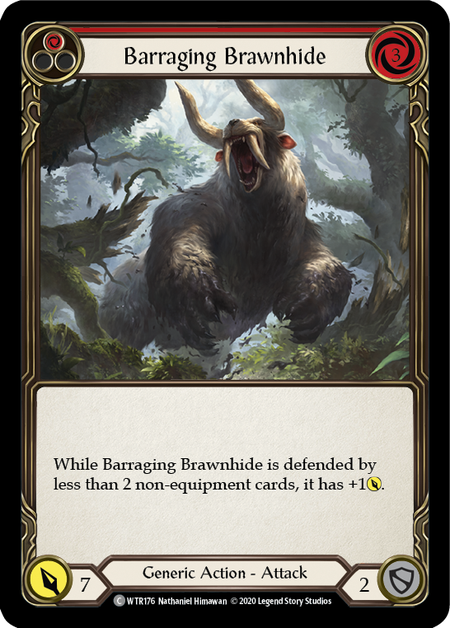
Barraging Brawnhide from Welcome to Rathe, art by Nathaniel Himawan.
One of the many savage creatures in the world of Rathe.

Tuesday, October 12, 2021

Welcome to Rathe - The World Design of Flesh and Blood Part 1

After playing Flesh and Blood TCG casually for a few months and failing to find a local playgroup two weeks in a row, I finally sat down to read Flesh and Blood: Welcome to Rathe in preparation for writing a campaign.

Excitement. That's what I've felt a lot of in the past few weeks as I've gotten into Flesh and Blood. Some of it is from having a new hobby to replace those that I've lost over the years. Most of it, I think, is from the design of the game, the art, and a handful of people I enjoy watching explore the game. I love seeing potential in things, and this IP and the studio of people behind it have a lot of potential.

Trading Card Games are an incredible medium for bringing people together. Their unifying force transcends age, race, religion, gender, and even social status, through a common language of "playing great games."
—
Flesh and Blood: Welcome to Rathe, Legend Story Studios

These are the first words you see when you open the cover. I agree with them, deeply. Yet, after reading the rest of the book, I feel that some aspects of the world do not align well with that message.

That isn't to say I disliked the book, or its writing and information, or its art. I enjoyed all of those things, and I am still enthusiastic about Flesh and Blood as a game, and about its world—and creating spaces within that world for my own (and potentially others') enjoyment—because of its potential.

I love planting seeds and growing plants of all kinds, literally and figuratively. I view each of my worldbuilding projects in much the same way as I view gardening and taking care of my own and others' plants. Or, in this case, more like a large yard and all of its grass, trees, and shrubs, and potential gardens and visiting animals.
    This series is going to be about me digging into the setting of Flesh and Blood as it has been presented so far by Legend Story Studios, finding seeds (ideas) that interest me, and growing (developing) them into something I can use to create my own story and characters around.

Eventually (whether or not I find other people who are interested and willing to be emotionally invested) this will culminate as a homebrew adventure series that can be played by using print-and-play documents or Tabletop Simulator.
    As a matter of fact, I already have a prologue adventure primed for playtesting, and the fair draft of my story outline and chapters are ready for further development. But first I'd like to learn more; ideally, everything I make for this project would merge with and expand on the existing setting and story threads with fewer seams and smaller voids, just as I want my homebrew game design to work with the existing systems, mechanics, and overall design of the official game.

Tuesday, January 21, 2020

Diablo IV Wish List: New Classes

Since I saw the trailer for Diablo IV, the game has been ever-present, often at the back of my mind but lately at the front of it. Watching gameplay demos and listening to the developers and hearing the thoughts of other Diablo fans got me thinking more about various aspects of the game and, of course, all the possibilities that a new game could fulfill. For now, I'll keep my giant stack of notes and ideas and Diablo game design philosophy ramblings to myself, and will stick to presenting a few ideas I'd love to see in Diablo IV.

New Character Classes


Instead of a righteous, divine paladin or crusader type, I would love to see a grimmer, darker take on a priest or cleric archetype. They might be a fearful, lost pilgrim wandering Sanctuary, hanging dearly onto their last threads of life. Or, a stoic death-seeker following the dying religion of a two-faced god-hero of old. Perhaps they are a warrior poet of sorts, but one that only sings tragic tales of flawed and fallen heroes and false martyrs.
  Alternatively, they are a wounded fallen angel who has long since abandoned aspirations of ever fully healing—let alone re-ascension—and see their strive for a sense of purpose as folly, a sick joke they can't help but play on themselves.

A dirty-fighting urchin from a large city, a roguish scoundrel and grave robber who has been traveling around the world their entire life, or a former pirate lord who has forsaken their mutinous crew and seeks treasure in new parts of the world. Over time they might grow to become a great duelist or battlefield tactician, if they can resist their curse of greed.

An archaeologist-wizard who discovered an ancient power in the desert around their home. They left the desert to escape the horrors they witnessed, and look for other artifacts and lost knowledge that might bring peace to their mind, or at least occupy their curiosity (obsession) and give them short-term purpose in fighting demons. Perhaps they are instead an illusionist or psychic who summons living nightmares from their own mind and cripples the minds of others. Or, a warlock and servant of a distant star who calls unknowable things from the cosmos to Sanctuary.

A twist on the necromancer as a cunning and sneaky curse mage (witch/warlock) who isn't afraid to use their enemies' tactics and forbidden knowledge against them and actually relishes it. They aren't unfamiliar with old ways of healing thanks to their parents' teachings—their darker fascinations are thanks to their parents' supportiveness of their morbid curiosity as a child. Perhaps they are a child of a human and a fiend.

Instead of a monk or another fighter archetype, an opportunistic survivalist who has trained in multiple fighting styles/stances and the use of intricate traps and explosive devices. They might be a ranger specializing in two-weapon fighting, a scavenger who prefers to fight from afar, or a tamer of beasts that hungers for demonic flesh as much as themselves (figuratively or literally).

An old mystic with a greatsword possessed by their only surviving friend: a fiend wreathed in ever-burning, tortuous fire. Either the enchantress from Diablo 3, somehow still surviving and able to fight, or her child/grandchild carrying Maximus—the demon may have been transferred from the weapon to their mind and body. Or, a devout follower of a perverted faith based once upon a time on the life story, deeds, and teachings of the enchantress, and who is consumed by lunacy over time.

An artificial golem who woke up in a hermit's workshop or the depths of a sage's bizarre pocket dimension. They are either an engineer who augments their metallic body and the weapons and armor of their allies or devices they deploy, or an alchemist who concocts unstable potions and steals essence from their enemies to infuse into their alien heart.
  Alternatively, they are a mutant zombie alchemist who uses their bizarre infusions and skeletal grafts to keep their body alive and to turn it into a living weapon. Or, a rotting, resurrected agender mummy and former archivist-wizard whose cursed, shriveled, black heart-phylactery exudes strange energy, or a golemancer/lithomancer lich with an artificial black iron heart-phylactery. (They could also be the archaeologist described above.)

And no class would be complete without...


Legendary and Set Items


Druid: Permanent cursed/diseased-looking inhuman form, or all their transformations are extended and turns their focus to melee. A fey form emphasizing nature, death, and disease, or that of a dark dryad that makes them transform into beasts made of shifting plants that glow inside with eerie green light or swirl with dark shadows. Runestone armor crackling with electricity, with transformations of stone or pure lightning that call down lightning bolts.
Sorcerer: Blue-white armor made by unseelie fey that allows them to become an icy archon. A dress of fine, dark or light purple cloths and thorny silver jewelry inspired by insects, all infused with and oozing unseelie magic. A crown of elements that can be triggered by casting elements of one type, and summons a fiery skeleton, storm spirit, or ice banshee. Armor made from a butchered phoenix.
Barbarian: Patchwork, treated demon skins that fill them with demonic blood and fury when raging. Iron or stone golem weapon, or chest armor made of the belly of a smelter demon or forge of war. Bloodthorn dryad weapons. Runestone plate armor or barkskin and enchanted tattoos that turn them into a furiously growing storm while whirlwinding.
Cleric/Necromancer: A skeletal/phantom mage that can temporarily walk the realm of the dead. Armor that turns them into a white-hot skeleton bound in spiked black iron chains or welded into spiked, smoldering black plate armor. A veiled spirit or blood angel. The form of a vampire themed to a new place/culture in Sanctuary.
Whether or not any of these ideas are seen by the team, hopefully they can inspire you to make your own characters and classes and items for D&D, be it for a game of "D&Diablo" or other adventures in settings like Dark Sun, Ravnica, Planescape, Spelljammer, and Innistrad.

Wednesday, November 13, 2019

Fatal Encounters: Gorgimerae

There are days when I still get up early, go upstairs, and have the feeling that I need to start getting coffee and brown sugar maple Cream of Wheat and orange juice put out for someone who is no longer here. Or, that the creaking upstairs is from someone walking around and not just the wind. Yesterday was one of those days, and to alleviate the sad thoughts for a moment and keep my mind busy, let's do something easy that makes me feel accomplished for a little while: make monsters!

This time, my twist on the gorgimera, and encounters inspired by The Lost Caverns of Tsojcanth.
  Design and balance note: I had some trouble making this "fatal encounter" less fatal and still impactful. Which, may or may not be a good thing depending on the person reading this. You'll see later that it uses a handful of d6 for its attacks, which used to be a lot more d6 plus a lot of d8. I found this set of stats and abilities to work well for me and the group I intended it for (five 5th-level PCs), and for some DMs/parties those could very well be reduced further to mostly d4 damage dice or increased slightly. Hopefully some of the encounter suggestions are helpful for fine tuning and improvising as well.
  If you missed them, check out my previous blog post and Matt Colville's "Action Oriented Monsters" video here for examples of "villain actions," or "elite actions" as I call them.

Gorgimera (GORR-geh-MAYR-uh)
  • The offspring of terrifying chimerae and gorgons (the D&D gorgon, a metal-scaled bull monstrosity with petrifying green vapor breath), gorgimera are even more fearsome. This monster bears leonine and draconian features and has three heads, two of which (the lion and red dragon) are the same as it, but the third head is a fuming gorgon instead of a rabid goat.
  • Gorgons and gorgimerae, having metallic bodies (or partly, in the latter's case) and lungs that create petrifying vapors, are immune to being petrified by their kin's vapor and are highly resistant to other petrification effects from basilisks, cockatrice, and medusae. The lion and dragon heads, however, are still susceptible to a degree. If turned to stone, the other two heads and all its limbs will slowly regenerate back to normal within a week to a month (longer for older gorgimerae), and the process is hastened by sunlight.
  • Gorgimerae are more rampant and tenacious than chimerae thanks to the attitude their gorgon parents pass on to them, and can be stubborn and unyielding to the extreme. Instead of fleeing when wounded by a powerful foe, most gorgimera will choose go into a frenzy, even fighting to the death in their prideful stubborness. Although they are not as skilled at flying as chimera for their greater strength and ferocity, they can cover much more ground at the first sight of competition and when riled up.
      They rarely fight with their chimera and gorgon cousins, and more rarely with each other being so few and far between, but a gorgimera duel is a spectacular sight. Some try to petrify their opponent as quickly as possible, at which point it will break apart its stone body and eat it. Others opt to try headbutting and goring the goat or gorgon head like a hammer trying to hit and shatter another hammer, at which point the victor (not unlikely to win by the merit of the loser's stupidity against a bulkier foe) will devour the loser with its lion and dragon mouths.
  • When the lion and dragon heads aren't craving fresh meat, aren't picking fights, and nothing is distracting or provoking the gorgon one, it spends that little time casually wandering and grazing plains and riverbanks. Occasionally, a gorgimera can be found pawing and bobbing (almost playfully) in a river or beach for fish with each of its heads (eating salmon, trout, sturgeon, catfish, and small sharks) and picking through rocks to chew on with its gorgon head. A rarer and more exceptional sight is a gorgimera playfully splashing in shallow water like a jovial pup—nothing deeper than its knees, though, as they struggle to swim.
Gorgimera
Large monstrosity, chaotic evilAC 16, HP 152 (16d10 + 64), Bloodied 76, Speed 40 ft., fly 60 ft.
STR 19 (+4), DEX 11 (+0), CON 18 (+4), INT 5 (-3), WIS 12 (+1), CHA 10 (+0)
Skills: Intimidation +6, Perception +7
Condition Immunities: petrified
Senses: darkvision 90 ft., passive Perception 17
Languages: understands Draconic and Giant but can't speak
Challenge Rating: 9 (5,000 XP)
Traits
Three Heads.
The gorgimera has advantage on Wisdom (Perception) checks and on saving throws against being blinded, deafened, frightened, stunned, and knocked unconscious. Additionally, each of its heads can be targeted individually and have the following properties:
  Lion Head. AC 15, HP 38. While this head is unconscious, its frightful roar and bite are disabled.
  Dragon Head. AC 17, HP 50. While this head is unconscious, its fire breath and meteor are disabled.
  Gorgon Head. AC 19, HP 64. While this head is unconscious, its gore and petrifying breath are disabled.
Trample. If the gorgimera moves at least 20 feet and then hits a creature with a melee attack on the same turn, that target must succeed on a DC 17 Strength saving throw or be knocked prone. If a target is prone, the gorgimera can make one stomp attack against it as a bonus action.
Lion Head: Frightful Roar. Each creature of the gorgimera's choice that is within 60 feet of the gorgimera and that can hear it must succeed on a DC 15 Wisdom saving throw or become frightened for 1 minute. A creature can repeat the saving throw at the end of each of its turns, ending the effect on itself on a success. If a creature's save is successful or the effect ends for it, it is immune to the gorgimera's roar for 24 hours.
ActionsMultiattack. The gorgimera makes one of each of the following attacks:
  Lion Head: Bite. Melee Weapon Attack: +9 to hit, reach 5 ft., one target. Hit: 9 (1d6 + 6) piercing damage.
  Dragon Head: Fire Breath. Each creature in a 15-foot cone must make a DC 15 Dexterity saving throw, taking 10 (3d6) fire damage on a failed save, or half as much on a successful one.
  Gorgon Head: Gore. Melee Weapon Attack:  +9 to hit, reach 5 ft., one target. Hit: 9 (1d6 + 6) piercing damage.
Stomp. Melee Weapon Attack: +8 to hit, reach 5 ft., up to four targets. Hit: 8 (1d8 + 4) slashing damage.
Dragon Head: Meteor (2/day). Ranged Spell Attack: range 120 ft. Each creature in a 20-foot sphere must make a DC 17 Dexterity saving throw, taking 17 (5d6) fire damage on a failed save, or half as much on a successful one. Additionally on a failed save, a creature has disadvantage on saving throws against the gorgimera's fire breath until the end of its next turn.
Gorgon Head: Petrifying Breath (2/day). The gorgon head exhales green vapor all around it. Each creature in a 15-foot cone must succeed on a DC 14 Constitution saving throw or begin to turn to stone and restrained. The restrained target must repeat the saving throw at the end of its next turn, ending the effect on itself on a success. On a failure, the target is petrified until freed by the greater restoration spell or other magic.
Elite ActionsFirestorm. As a free action at the start of the first round of combat, the gorgimera uses meteor.
Bull Rush. At the start of the first round of combat, the gorgimera uses its movement to fly up to its speed within 20 feet of a creature and then run at it and use gore and petrifying breath (see trample).
Tantrum. When the gorgimera becomes bloodied, it immediately runs around up to its speed in a straight line or circle, trampling creatures underfoot. This movement provokes attacks of opportunity. It uses stomp against each creature it moved past with a +10 to hit, dealing bludgeoning damage instead of slashing damage, and then it uses stomp against all prone creatures within reach (see trample).


The Rainbow Caverns


Recommended for a party of four to six 4th-6th level characters, intended for five 5th-level characters.
Patiently awaiting the next generation of spelunkers and thieves is a sprawling cavern-scape first discovered by a mage of old who quickly filled it with unimaginable wealth and unspeakable terrors.
  Overgrown, well-worn steps lie ahead, leading down into its twisting halls and absolute darkness. The caves sigh with cool, deep breaths, as if calling out to you.

Environment Features
Absolute Darkness. No light reaches the caves beyond the first few steps at the entrance. All creatures require a light source or special senses (such as blindsight or tremorsense) in order to see anything. Darkvision does not allow a creature to see in the caves unless it has a light source. A creature that can't see must succeed on a DC 17 Survival check to avoid getting lost.
Earthcancer. Much of the ground is covered in aberrant formations and corrupted, fungal growths. Random patches of ground count as difficult terrain (movement speed is reduced by 1/4th on average). A creature that comes in contact with earthcancer or ends its turn in the space must succeed on a DC 17 Constitution saving throw or take 2 (1d4) poison damage. If it fails the save by 5 or more (DC 12), it becomes nauseated and unable to take any action until the end of their next turn.
  If the party is healthy when they enter the gorgimera lair, the more earthcancer there will be. Likewise, if the party is in worse shape, the less earthcancer there will be.

Part 1

As the party journeys deeper into the caves, down both winding natural paths and straight artificial stairways, they come to a flat area. The ground here has become earthcancer and has formed 1d4 shriekers. Swarms of bats and 1d4 stirges swirl around each character and move deftly through interconnected tunnels pocked with large insect (centipede) and stirge nests and little more, bothering the party only for a moment if they disturb the fungi or nests.
  Inside one small side cave lies a body, face-down, wearing loose brown, moldy, moth-eaten clothes and a bulky satchel. Something glints in light (the pommel of a longsword, a flying sword) and the sword and satchel both glow with an aura for anyone benefiting from detect magic. Earthcancer has spread in a 5-foot radius around the corpse, and a gas spore is growing under the clothers in the corpse (DC 14 Perception check to spot the spore). The flying sword (+7 to hit) will attack whoever touches it or the corpse; at 0 HP it falls to the ground and becomes a longsword +1 with 3 charges which can be spent to turn it into a dancing sword for 1 hour (it does not regain spent charges). Inside the satchel are two rings of protection, one of which appears to grant +3 AC if identified but actually curses whoever attunes to it and imparts a -3 penalty to AC (the ring cannot be removed while the wearer is cursed, and the curse can only be removed by separating the finger and ring from the wearer for 24 hours, or by casting remove curse at 5th level).

Part 2

Gem-crusted stalactites hang from the ceiling of a narrowing tunnel. Dirt and a few tiny rocks fall from one of the formations as the party moves through, and minute vibrations from an unseen source cause one stalactite to crack and fall (DC 16 Dexterity save or take 1d6 bludgeoning damage). Walking through the tunnel, each character must make a Perception check. The character with the highest roll spots another stalactite that looks like a crystal-coated piercer; if the roll is 18 or higher they also spot a ruby on it. If damaged, the stalactite will break, fall (dealing 1d6 bludgeoning damage if someone is underneath it and doesn't move), and release a ruby worth 750 gp.
  Rumbling is heard and felt behind the party as a xorn moves through, paying no mind to the party, eating crystals in a wall behind them that causes part of it to collapse and a tight passage to open to another room with a wall full of crystals. In that room, the damp floor marked with patches of earthcancer (difficult terrain not including the walls and ceiling, DC 16 Athletics check to climb the walls) is littered with junk. On the far side of the room, a heavily scarred roper is munching on three dead troglodytes. 1 merrow is on the opposite side of the room sitting against a stalagmite, catching its breath and reading a scroll of stone to flesh written in aquan. It takes ten minutes to sort through the junk in the room and gather one explorer's pack worth of salvageable items (except with 5 rations total and the rope breaks if more than 50 pounds of weight is put on it).

Part 3

The main passageway continues winding onward and sloping down then abruptly starts to widen horizontally and vertically, eventually coming to a wider opening (50 ft in all dimensions) with a 15-foot-deep pool of clear water. A haze of magical darkness lingers in the area, obscuring everything from the surface of the pool to the ceiling. Marred stone statues and broken pieces of humanoids and beasts barely jut out of the darkness at the water's edge. Eight crumbling creatures are frozen solid in the middle of crawling back towards the tunnel, and many more have sunken and piled up beneath the surface, making the pool shallower at the near and far side. On the far side of the pool, some of the statues and limbs have returned to their natural, fleshy state, and dark blood stains the area. Also lurking underwater are 2 swarms of quippers and 3 ghasts. Earthcancer has spread in a 30-foot radius around the far edge of the pool.
For a stronger or more experienced party, replace 1 swarm of quippers with 1 giant zombie constrictor snake (a constrictor snake with the undead fortitude trait).

  Crossing the pool leads to a massive cave (60 ft wide, 100 ft high) covered with crystals and rippling streams and glossy bumps that all sparkle and shimmer with a rainbow of colors from the tiniest glint of light. A heap of treasure—gems, silver and gold and mithril coins and squares of chain maille, and steel and bronze weapons and helmets and armor the designs of which must span centuries—sits in the center of the chamber. Six stalactites at the very top of the cave ceiling twist and end in an elegant jeweled point, which give off sunlight that matches the natural light outside at the current time of day and gradually cure petrification over the course of 1d10 days. After their awe dissipates, characters will notice the broken, prone stone bodies and earthcancer covering the chamber floor. And beneath the mound of treasure lies a gorgimera starved of fresh meat.
For a stronger or fresh party, the gorgimera may push them into areas where earthcancer is festering, grounding the strongest or weakest link in the chain as it sees fit. For a much larger party or long encounter (or after the encounter ends), 1d4 of the statues start to animate every other round (use the ghoul stat block with a speed of 10 feet for the first round they are animated and 30 feet thereafter).
  The treasure hoard contains the following: 6 cp, 5,000 sp, 2,160 gp, 400 pp (enchanted to weigh twice as much and fall out of any pocket or bag they are placed in), 10 gems (each gem weighs 1d10 lbs and is worth 5d10 x 100 gp), fine clothes, costume clothes (goat costume), costume clothes (gorgon costume), a potion of fire breath, 3 vials of saffron (worth 150 gp each and can be used in food or potions to create a potion of clairvoyance that also grants truesight out to 60 feet for the duration), 2 vials of red dragon repellant oil, a scroll of protection from elementals written in draconic, a dagger +1, a mithril war maul head (4 lbs), a bag of holding (contains two diamond dice worth 750 gp each), a heavily-stained 6-page notebook (a cursed copied section of the book of vile darkness, swarms of leeches spawn when opened to the the flawed 5th and 6th pages), and a small vial of purple ooze (when poured out and left in a space with oxygen or water, it grows one size category every 1d8 hours until it becomes a moaning otyugh-shaped black pudding).
  A stairwell is hidden at the back of the chamber behind a towering wall of stalagmites, which leads to a squished tunnel that is flooded for a short length that then leads to a back entrance/exit covered in a mound of dirt and small shrubs and their tangled roots.

Thanks for reading, and if you enjoyed any of this, check out more monsters in my Brash Brutes series and my first DMsGuild adventure, Disturbance at Dusk, set in the plane of Ravnica.

Monday, October 28, 2019

Fatal Encounters: Slum Reapers

"October! It's already here!" And my favorite time of the year is already over.

Nearly thirty days ago I started writing a blog post (this post) about a monster in my (spooky-ish) Ravnica adventure Disturbance at Dusk, but never quite got around to finishing it. The monsters featured in the adventure are riffs on an existing creature from Magic: The Gathering called the slum reaper. Let's jump in and (finally) talk about them, everything that I wanted to do with them, and about a few aspects of general monster design.

Slum Reaper art for Magic: The Gathering by Karl Kopinski

Visually one of my favorite horrors (read: aberrations) in Magic, slum reapers channel both Giger and Lovecraft with their hard, glossy, pseudo-insectile legs and upper bodies with a slew of other alien features, including incomprehensible maws, long clawed arms with too many joints and erroneous extra bones, and winding serpentine lower bodies that almost-but-not-quite clash with the rest of their form. In Ravnica lore, the slum reapers, as their name suggests, are creatures sent into slums to reap the "souls of those no one will miss." They are controlled (according to the card's original flavor text) by the Orzhov Syndicate to bolster the guild's army of indentured spirits, but (according to the text in a reprint) are known by some undercity travelers to roam near the territory of the Golgari Swarm. For official lore, as with most Magic creatures, that's all there is. Of course, for fun, exciting, flavorful Dungeon's & Dragons adventures, that isn't enough, so I've expanded on those two seeds for my own Ravnica adventures using some very old ideas of my own and a few queues from the art.
  • Undercity Abominations. The slum reapers dwell in the darkest, dingiest regions beneath the city, in nasty habitats ranging from ancient catacombs and overgrown churches to rotten sewer tunnels and rubblebelt caves. Their secondary habitats seem to be wherever there is food—and, in Ravnica, the busy streets are the greatest hunting grounds for many predators.
  • Uncommon and Unique. Few slum reapers are the same, even in their general form. They all share a similar chitinous skin, have many legs and claws, and typically have small, bony or membranous wings. All other features beyond those, and their behaviors, vary wildly.
  • Vermin Eaters. Some of the creatures have been suspected to co-exist with vermin and insects—rats, giant centipedes, and possibly even kraul—but such beliefs are only theory for now. What is known is that they feed on small beasts, insects, and humanoids, and that they have an ingrained, insatiable hunger for the flesh and blood of the sick, injured, and forlorn.
  • Born, or Built? The greatest unsolved mystery about the aberrant creatures of Ravnica is their origin, and this is no different for the slum reapers. They have existed for millennia but none know of where they come from or if they mutated and evolved from ancient insects. Few signs point to the same theory, which may suggest that their current form didn't come about naturally. Perhaps their appetites and natural habitats gave rise to mutations that made them fearsome predators of the past, which peaked the curiosity of a fleshwarper or thrull breeder who then captured, bred, dissected, and reconstructed them, releasing their failed experiments back into the underground urban wilds.
In Disturbance at Dusk, a group of uniquely pale slum reapers appears to harass the citizens and the party, all of them with strange contraptions grafted to their bodies and limbs. These I called "dread reapers," just one of many variants I toyed with while making encounters. For their stat blocks, I referred DMs to the flying horror found in Guildmasters' Guide to Ravnica (p. 203) with a short list of adjustments. What I wanted to do was create an all-new monster stat block, but made the decision to use the flying horror because it seemed like an elegant solution that made writing the adventure easier for me. Now, though, I've come up with a much more interesting "base monster" and a handful of monster "templates" or "plug-ins" to, well, plug-in to the base monster.

While making monsters for other DMs to use who don't normally use monsters the same way that I do, and many who haven't played other editions of D&D and used monsters in them (such as 4e), I've been trying to come up with a better way to present monsters that is still familiar when compared to stat blocks and rules in 5e. My intent with the base monster template here is to present a basic monster stat block that follows the design and language (more or less) of stat blocks in the Monster Manual and other official sourcebooks and adventures, but that I and DMs-who-aren't-me can combine with more fun sets of traits and actions.

Action Oriented Monsters


I'll take a second to derail my post and point you to a video by Matt Colville about what he calls "Action Oriented Monsters" found here. The goal of designing monsters in the way seen in the video (particularly "solo" or "boss" monsters) is the same as my goals; to make interesting, memorable encounters that are fun and challenging for players and flexible for DMs. The inspirations for a lot of the design, I presume, are also similar and come from memorable scenes in books and movies and video games, but also the way monsters are presented in 4e. The basic concepts are as follows:
  • Give your monster the basic stats you need (AC, HP, movement speed, initiative, and any important ability scores),
  • Let yourself be flexible with those stats during gameplay,
  • Give it senses (passive Perception, darkvision or other senses if applicable) and a few notable traits or vulnerabilities/resistances (optional),
  • Give it an easy-to-remember basic attack (and a multiattack that uses it if applicable),
  • Give it an easy-to-remember (and probably weaker) ranged or melee attack (whichever one it doesn't already have),
  • And, lastly, give it something unique, such as a more powerful attack it can use once per encounter, a strong spell (or spell-like ability) it can use each round, a reaction, or a special action that lets it move and attack or even summon other monsters or set and activate traps.
For strong, solo monsters, Matt suggests a few other things including one trick I used to use all the time but, for whatever reason, had completely forgot about until I watched his video. That trick is to give it one (or more) special actions that happen on specific rounds in combat. I used to use that all the time for "elite"/solo and boss monsters, and for hazards like weather and traps. Instead of giving a monster a recharge action (an action that, once used, makes the DM roll a d6 to see if it recharges and is used again), these round-based actions remove some of the randomness and reduces the swingy-ness of a fight, making an encounter with that monster more controlled but still exciting and memorable and, if need be, dangerous. For this dread reaper design and the design of a vampire villain (a topic for another day), that was my "Aha! Wait... Why didn't I remember that?" moment.
  The terminology I've been using for the actions varies slightly from his; what Matt calls "Villain Actions" in his video are what I call "Elite Actions" (or sometimes "Solo Actions" or "Encounter Powers") referring to solo or elite creatures that are slightly more powerful than the average creature. Legendary Actions I still use the same way as the official 5e rules. Some minions (creatures that die when hit by any attack that deals damage) I also give these actions to, though I make sure they are very minor effects or for much higher challenge rating monsters.
  For the sake of not having to write it out every time, here's a reminder for the "Legendary Action" rules: A creature can take a set number of legendary actions, choosing from the options in its stat block. Only one legendary action can be taken at a time and only at the end of another creature's turn. A creature with legendary actions regains spent actions at the start of its turn.

Now, back to my monsters.

The Reaper Comes


For the first half of the puzzle, the base stat block:

Slum Reaper
Medium aberration, lawful evil
AC 15, HP 55 (10d8 + 10), Bloodied 24 (HP/2), Speed 40 ft., Fly 30 ft., INI +3
STR 10 (+0), DEX 18 (+4), CON 12 (+1), INT 2 (-4), WIS 15 (+2), CHA 16 (+3)
Skills: Perception +4, Stealth +6
Damage Vulnerabilities: radiant
Condition Immunities: frightened
Senses: darkvision 120 ft., passive Perception 14
Languages: —
Challenge Rating: 3 (700 XP)
Traits
Keen Senses. The slum reaper has advantage on Wisdom (Perception) checks that rely on sight, hearing, or smell. Additionally, it gains a +2 bonus to checks made to locate creatures that are suffering from a disease or injury.
Sunlight Sensitivity. While in sunlight, the slum reaper has disadvantage on attack rolls, as well as on Wisdom (Perception) checks that rely on sight.
Actions
Multiattack. The slum reaper makes one claw attack and one tail attack.
Claw. Melee Weapon Attack: +6 to hit, reach 5 ft., one target. Hit: 6 (1d6 + 3) slashing damage plus 5 (2d4) psychic damage.
Tail. Melee Weapon Attack: +3 to hit, reach 10 ft., one target. Hit: 4 (1d8) bludgeoning damage.
Essentially, this is just the stat block for a paired-down, modified flying horror from GGR that could be used as-is. More than that, it's a foundation to build a better monster on top of, a monster that fits the fantastic art above and (hopefully) the story and tension in whatever adventure you use it in.
  In the adventure, I chose to change their attacks to deal lightning damage to highlight their strange grafts, but psychic damage makes more sense for the base aberration. Also note that the frightening screech attack from the flying horror has been removed; instead, I'm going to have extra actions included in the variants below.

Optional Trait: Death Shriek. When the reaper dies, it lets out a piercing cry with its last breath. Creatures outside the encounter within 120 feet and that are smaller than it in size have a 50% chance to flee in fear, otherwise they slowly approach to investigate.
  With this trait, smaller creature will likely run even farther away from the battle, while some creatures or larger monsters may come to inspect the site or feed on its corpse. It's a quirky, flavorful trait, but it can make the world seem more alive and make the death of the monster more impactful. Another monster in Disturbance at Dusk can mimic the sounds of other creatures, and it might mimic a slum reaper's terrible shrieks to scare aware other predators or attract the party into an ambush.

Now onto the second half (the fun half).

Monster Variants


For each of these variants, everything in the variant is added to the base stat block above, or replaces a stat in it. For example, the base slum reaper's speed is 40 feet, for the screeching horror variant its speed becomes 30 instead; likewise with its damage vulnerabilities. If a variant doesn't list a stat or trait, use whatever is given in the base stat block. In general, I use the AC, HP, Speed, Initiative, ability scores, skills, senses and so forth from the base monster, and its basic attack or multiattack.

For the first variant, I'm just going to recreate the flying horror from GGR with a few changes.
  Notable loot from this and any other variant can include the following: mandibles dotted with distorted yellow and black teeth, long chitinous claws and nails, large leathery wings (for making clothing, light and medium armor, or perhaps a macabre kite), and hollow bones from its grotesquely long limbs (as sturdy as common wood varieties but lighter in weight). Radiant damage, and in this case fire as well, might burn away its wings and weaken some of its limbs and bones, weakening the creature but turning potential crafting materials into ash.
Reaper Frightener
Speed 30 ft., Fly 60 ft.
Damage Vulnerabilities: fire, radiant
Traits
Fear Frenzy. The reaper has advantage on attack rolls against frightened creatures.
Reactions
Psychic Rebuke. When the reaper is hit by a melee attack, it emits a blast of psychic energy, dealing 3 (1d6) psychic damage to each creature within 5 feet of it. Then it can fly up to 20 feet away and does not provoke opportunity attacks during this movement.
Elite Actions
The reaper uses its frightening shriek at the start of rounds one and three.
Frightening Shriek. The reaper shrieks, creating a head-splitting blast of energy that rings out for several hundred feet. Each creature within 60 feet of it that can hear it must succeed on a DC 11 Wisdom saving throw or be frightened of it for 1 minute, and each creature within 20 feet of it must succeed on a DC 15 saving throw instead. A frightened creature can repeat the saving throw at the end of each of its turns, ending the effect on itself on a success. If a creature's saving throw is successful or the effect ends, the creature is immune to the effect for the next 24 hours.

For its elite action, it uses frightening shriek at the start of the first and third rounds of combat, and the scream more dangerous for characters close to the reaper. To me that's fairly simple (after all, I'm the one who made it), but a lot of people who I help create adventures for have a lot questions about abilities like this. Here are a few that I either asked myself or get asked by others:
  • What if the party has a surprise round in which it can't act, like if it's unconscious or paralyzed for whatever reason? In that case, you can just have it use the ability as soon as it's able to, and two rounds after that.
  • What if the encounter goes on for more than three rounds? It might not, but if it does then I could have it continue shrieking every three rounds or so. Or, it might stop shrieking if every PC in the encounter has become immune to the effect, or it will deem the shriek an ineffective use of its energy so it stops—either way, I can forget about it and instead focus on other aspects of the encounter and improvising to keep it interesting, or give it one more round of rampaging attacks and end it before it technically reaches zero hit points if it feels like it's dragging on.
  • If this monster was the final boss of a lengthy undercity delve or foray into a crumbling necropolis, I might give it a heftier flyby reaction, or increase its flying speed further and give it the flyby trait (it doesn't provoke an opportunity attack when it flies out of an enemy's reach).
  • If this reaper was in a group with other monsters, I might remove it's "elite action" entire or decide to have the shriek only affect creatures within 30 feet with a DC of 13 like the flying horror's original attack. Against a party of ranged characters or, perhaps, if it was at the bottom of the initiative count, I might choose to use its rush to close in 30 extra towards an attacker during the first round.

As with everything in D&D, assess the situation and improvise as needed. This world, unlike Ravnica, doesn't have metaphysical law magic preventing you from doing something that isn't in the stat block, the important thing is for everyone playing to have fun. As long you the basic idea and stay flexible, I find that the majority of the time everything comes together fairly naturally. And the more you play, improvise, and make or use interesting monsters, the easier it all gets.
  It may be worth noting again here that, for me, I am using more long-winded language because I send my monsters to other DMs and also use them in published adventures (or at least I intend to). If you make monsters for your own use, you don't need to be nearly as precise with the language you use for anything, as long as you can understand what it means at a glance during gameplay.

For the second variant, I'll make a monster that fits what I imagined when creating Disturbance at Dusk, something closer to what I wanted to playtest against a party.
  Notable loot from this variant would be the spark blade grafted onto its arm:
  Spark Blade. Magic weapon (longsword), rare, 3 lbs. 1d8 slashing damage, versatile (1d10). You gain a +1 bonus to attack and damage rolls made with this magic weapon. This weapon has three charges. You can use an action and expend a charge to cause it to crackle with lightning. The effects lasts for 1 minute or until an attack with this weapon hits a creature. That creature must succeed on a DC 15 Constitution saving throw or take 7 (2d6) lightning damage and become paralyzed until the end of its next turn.
Dread Reaper
Traits
Spark Rig Graft. The reaper has a magical contraption grafted to its body and arms. The spark rig has the following properties:
  If the reaper kills a creature with a soul, the rig absorbs it. All of the reaper's lightning damage dice are upgraded to a d8 until the end of its next turn.
  When the reaper becomes bloodied, the spark rig becomes damaged, and its spark bolt and charge actions are disabled until the spark rig is repaired. Additionally, roll a d4. On a 1, the graft deals 5 (2d4) lightning damage to the reaper. On a 4, the graft deals 5 (2d4) lightning damage to all creatures within 10 feet of the reaper.
Actions
Multiattack. The reaper makes one spark blade attack and one tail attack.
Spark Blade. Melee Weapon Attack: +6 to hit, reach 10 ft., one target. Hit: 6 (1d6 + 3) slashing damage plus 7 (2d6) lightning damage.
Spark Bolt. Each creature in a 60-foot line must make a DC 13 Dexterity saving throw, taking 10 (3d6) lightning on a failed save or half as much on a successful one. The reaper must not be bloodied to do so.
Elite Actions
Beginning on the second round of combat, the reaper uses its charge every other round.
Charge. The reaper's spark rig charges with energy. At the start of the next round, it uses its overload. The reaper must not be bloodied to do so.
Overload. The reaper slams its arms into the ground or slashes in the air, unleashing waves of lightning from its spark rig graft. Each creature in a 20-foot cone must make a DC 15 Dexterity saving throw, taking 10 (3d6) lightning damage on a failed save or half as much on a successful one. Additionally on a failed save, a creature must succeed on a DC 13 Constitution saving or be paralyzed for 1 minute. A creature can reapeat the saving throw at the end of each of its turns, ending the effect on itself on a success.

An attentive or curious PCs can attempt to make an Intelligence (Arcana) check when they first encounter the monster and when it uses its charge. On a 15 or higher, they learn about its spark rig graft trait, and on a 17 or higher learn the effects of the reaper's charge and overload elite actions. On a result of 19 or higher, they also know that the graft is a ramshackle experiment using Izzet technology combined with some kind of spirit-powered contraption.

A reminder for what "bloodied" means: A creature is bloodied when its hit points are equal to or less than half its maximum hit points.
  For the dread reaper, being bloodied also means its spark rig graft is damaged and unstable.

The third variant is a slum reaper warped by the negative energies of the Shadowfell.
  Notable "loot" from this variant is most likely to include lingering madness and despair effects (DMG p. 258-260), and lingering injuries from its claws and bites (DMG p. 272). Such effects may even be "awarded" as soon as a character sees the monster!
Reaper Duskwalker
Large aberration, neutral evilHP 65 (10d10 + 10), Bloodied 32 (HP/2), Speed 40 ft., Climb 40 ft., INI +4
Skills: Perception +6, Stealth +8
Damage Resistances: acid, necrotic, poison, psychic
Challenge Rating: 4 (1,100 XP)
Traits
Mind Sight. Magical darkness doesn't impede the reaper's vision.
Spider Climb. The reaper can climb difficult surfaces, including upside down on ceilings, without needing to make an ability check.
ActionsMultiattack. The reaper makes two claw attacks. If both hit, the target is grappled (escape DC 14) and the reaper makes a bite attack with advantage.
Claw. Melee Weapon Attack: +6 to hit, reach 5 ft., one target. Hit: 7 (1d6 + 4) slashing damage plus 7 (2d6) necrotic damage.
Bite. Melee Weapon Attack: +4 to hit, reach 5 ft., one target. Hit: 3 (1d6) piercing damage plus 3 (1d6) acid damage. Miss: 3 (1d6) acid damage.
Legendary Actions
The reaper can take 3 legendary actions.
Bite. The reaper makes a bite attack. Additionally on a hit, it regains 3 hit points.
Consuming Shadows. The reaper deals 5 (2d6) necrotic damage to a creature standing in darkness that it can see up to 60 feet away.
Shadow Step (Costs 2 Actions). The reaper fills a 5-foot cube within 5 feet of it with magical darkness which remains for 1 minute, and gains +2 AC while in dim light or darkness until the start of its next turn. A creature with darkvision can't see through this darkness, and nonmagical light can't illuminate it. Additionally, the reaper can teleport up to 30 feet to an unoccupied space that is in dim light or darkness.
Elite Actions
The reaper uses darkness at the end of the first round of combat.
Darkness. The reaper casts the darkness spell which covers a 30-foot-radius sphere.

Sample reaper duskwalker encounter:
  The reaper is hiding in the shadows, clinging on a high ceiling, buried under debris or in a giant trapdoor spider lair under the street pavement (the former resident having been eaten), or skulking across rooftops during a "duskfall" (a Plane of Shadow manifest zone that cloaks the area in heavy, asphyxiating mist). As the party passes by, it reaches out to grab a creature and makes two claw attacks. If both claw attacks hit, the target is grappled (escape DC 14) and the reaper makes a bite attack with advantage.

Other Effects

Enraged (Barbarian Rage or basic attacks cleave and hit another adjacent creature), bleeding (Bloodied or steadily losing blood and hit points), infested (by insects), wounded (limping and loses part of its multiattack or deals reduced damage with an attack).
  PCs might encounter a slum reaper displaying one of these effects, or they might cause an affliction like enraged or wounded.

Friday, March 1, 2019

The Artificer 2019 Playtest

The Artificer, Or An Overwritten And Rambling Analysis Thereof


An updated version of the Unearthed Arcana playtest artificer (found here) was released and I got a chance to play it in a quick dungeon crawl, so let's talk about it!

The character I played was basically myself as a 4th-level artificer (alchemist). The dungeon crawl was very basic and not set in a specific place since we were only going for one short session.
  We fought bandits and wolves, ran into some kobolds and delved into some caverns, then fought some giant-spider-riding kobolds and encountered a trap (which the rogue-ranger set off) and half-ogres (or maybe bugbears, I'm not sure). Resting in a cave, we got ambushed by more bandits in the night and, once morning came, hauled a cart full of junk back to town using a wheelbarrow I whipped up with the help of my one-eyed malfunctioning-chameleon-skinned homunculus mutant which broke down halfway between the dungeon and the town but I'm happy that I made it at all — and I'll let you guess which of the two creations I mean broke down.
  Nothing spectacular happened except that I got to play D&D and tinker around with a new class with a few acquaintances. Thinking back on it, we might have played a tweaked part of The Keep on the Borderlands? I've watched others play it but never played it myself, a few of those pieces ring a bell now... Are there giant-spider-riding kobolds in that adventure? Anyway. Onto the more important part of this blog post: unofficial class playtest feedback!
  Before diving in, I want to point out again that this feedback is mostly from questions and concerns I was having at the table during my one session of play with a smattering of thoughts about it immediately afterwards. I'm not spending much time thinking about damage output or ways to exploit class features or multiclassing, I just played a session and have some thoughts. Mostly thoughts about terminology...

Infuse Item


Specifically, the term "infusion." It completely throws me off. To me, it implies creating mixtures, fluids, concoctions, extractions, imbibing, or it implies distillation; ideas that work for alchemists, but not characters who tinker with clockwork contraptions. Less important to me, it also implies something (usually a fluid substance) that is strong and fully saturated whereas this feature is meant to be used to add a minor supplementary or auxiliary effect to a small object until you reach higher levels — though, even at higher levels, the implications of "fully saturated" don't really fit most of the given "infusions" to me.
  Thinking about what might be better, words like "relic" or "artifact" or "talisman" don't quite fit since they imply a sense of time and historical importance. Other words like "mechanism" or "contraption" also don't quite fit since they often imply a larger scale and, especially with the latter, a certain amount of complexity.
  Ideas: gadget, tool, instrument, trinket, bauble, device, curio, apparatus, contraption, widget, prototype, accessory, charm, bangle, signet, pendant, capsule, knickknack, toy.
  "I create fascinating [trinkets, baubles, gadgets] out of mundane objects, like this one..." all sound much more on-brand to me compared to "I create wonderful infusions..." which is what an alchemist (specifically) would say. Additionally, I suspect "trinket" and "bauble" (and many of the other words listed above) are more apt to inspire artificer players to come up with their own ideas and techno-babble-icious names for their creations than "infusion" would, but that's more of a gut feeling than anything I can back up with science.
  Lastly for me (for this part), "infusions" don't line up with the fantasy I had in mind of tinkering with your spellcasting focuses and gadgets created using this feature to prepare my spells. If I'm making infusions, I think of chemistry class and teas and homemade tinctures.
  I feel like creating "infusions" should be part of an artificer subclass (the alchemist), not built-in to the base class as the featured mechanic, at least with that name.

As for the name of the class feature, there are plenty of other words that are more open to interpretation or that fit my fantasy better. Having "Infuse Item," "infusion," "Artificer Infusions list" use the same word is great for consistency and grokkability, they work together well and match the given flavor of imbuing items with your magic, but the word itself lacking the proper fantastical flavor still casts a shadow over those aspects and whole feature for me.
  I assumed that the words "Tinker" and "trinket" were intentionally not used in order to avoid being confused with "trinket lists" (lists of mundane, often useless items) in some books. However, "tinker's tools" and "tinker" abilities elsewhere are used by other creatures and NPCs all over the place (books and settings) to create clockwork devices and other gadgets that very much resemble the magic items created with this class feature. Tools that are more likely to be involved with creating an "infusion" (alchemist's supplies, herbalism kits, etc.) are not specifically mentioned for the base artificer whereas tools to create clockwork devices and gadgets are (tinker's tools).

The feature and its terminology as-is makes me disconnect from the rules as-written, but, judging by how little it mattered to me by the end of the session, it's possible that it will make a large chunk of artificer players construct their own words and flavors at the table out of and in character to express their own specific fantasy. Even if I don't like it or I disagree with deciding on that terminology, it will probably do its job just fine and it has the potential to (intentionally or not) inspire players to infuse their character with their own fantasy. But for a handful of reasons it does bug me.
  I like when the words to match the mechanics and the narrative, I don't like when they don't.

Specialist Summons


Both subclass options, the alchemist and artillerist, both gain features at 3rd-level to create or magically summon a homunculus or arcane turret. I find the idea of having a small homunculus ally following me around and concocting potions fairly interesting and funny, but having a pet is not something I wanted to be doing as an artificer. The flavor for the alchemist specialist is fine, and the other features make sense mechanically and narratively, but the other option of being an artillerist specialist and summoning walking cannons feels out of place everywhere — except Eberron with its magi-tech and Ravnica, also with some magi-tech including the guild keyrune artifacts. I want to play a solo artificer, so of course not having a solo-focused specialist is somewhat disappointing. Not having a seafaring, gunpowder-blasting turret option when there is a seafaring adventure book coming up is another slight letdown but changing the flavor of the turret at the table is effortless.
  A bigger discrepancy I have with the artillerist is that the given flavor is that you "summon" or "conjure" an arcane turret basically the same way you would conjure up any other summoned creature or cast a spell with a literal and figurative hand wave, as opposed to "constructing" the contraption and "deploying" it when needed. I wish there was a somewhat bulky turret crafting system built-in to the artillerist, however, the system being so lightweight also makes it easy to build on and incorporate other homebrew systems into, so I can't complain about it (too much).

Despite my disinclination to play either subclass, both offer a lot of fun potential with their summons alone, and the summons have a very large creative design space for different homunculus and turret options both for flavor and in-depth mechanical changes, all of which I really appreciate. They're bizarre, but they inspire me in weird, fun ways.

Artificer Infusions


I dislike the name of the feature, I want the written flavor to be different, and I wish there were more low-level-low-power-but-interesting effects rather than "+X/-X of a stat" effects (for the boring weapon and armor enhancements). That said, I think these are pretty cool. Each infusion acts like an optional class feature but with a lot of artificer-y flavor behind it. And, for settings like Eberron and Ravnica, the created items fit so naturally.

Specific infusion notes:
  • Boots of the Winding Path. A simple teleport was surprising to see, but at 4th-level the 15-foot BAMF! seemed fine and worked well for moving between shelves at the library, as well as in combat for bouncing around and avoiding head-to-head fights and attacks of opportunity.
      Side note: This particular infusion played out almost exactly like an ability my old beguiler had (minus some ethereal phasing nonsense that I crammed in), which moves my rating from an A to an A++.
  • Enhanced Weapon. Turning a non-magical weapon into a magical one — and one that anybody capable of wielding it can use — by spending one of your infusions and not spending a spell slot is nice. At 5th-level (when you acquire Arcane Armament) and higher, it's likely that you'll have a magic weapon or at least the arcane weapon spell, but the ability to make another one on the fly is nice. It's just nice. It could be better or worked into Arcane Armament somehow, I don't know how, but the simplicity makes it a nice on-off effect and doesn't really step into the territory of anyone else augmenting weapons/attacks.
  • Returning Weapon. A.k.a. Mjolnir a.k.a. boomerang weapon. Nothing extreme or convoluted in the slightest, it's another on-off infusion to make a weapon magical and give it the Mjolnir property. Cool.
  • Many-Handed Pouch. Can you connect the pouches to a bag of holding, or vice-versa? How do you "infuse" a pouch with an alchemical substance that creates a shared interdimensional space between a bunch of other pouches...? How do infusions work, really?
      "A pouch operates as long as it is within 100 miles of another one of the pouches; the pouch is otherwise empty and won’t accept any contents." (p. 9)
    Why can you not store anything in a deactivated pouch? If the infusion ends, I assume the pouches revert to being the same regular, everyday pouches they were before they were infused, just like all infusions, so why would they not function like mundane pouches when out of range? Does another rule in the game that I'm unaware of call for that line for when the item deactivates from being out of range but not for when the infusion ends? It just seems odd.
      I'm being overly critical with this one, but I did find myself internally asking a lot of questions about this particular infusion and infusions in general. I used it once and mostly forgot about it, which in my experience is what happens with everyone who has a bag of holding.
  • Replicate Magic Item. I didn't understand how this "infusion" worked at all, mechanically or narratively. I scratched my head, scratched my chin, held The Thinker pose for several seconds if not for one whole minute, and came up with nothing.
      "Using this infusion, you replicate a magic item." (Replicate Magic Item, p. 9)
      "At 2nd level, you gain the ability to imbue mundane items with certain magical infusions. The magic items you create with this feature are effectively prototypes of permanent items."
    (Infuse Item, p. 5)
      "Whenever you finish a long rest, you can touch a nonmagical object and imbue it with one of your artificer infusions, turning it into a magic item."
    (Infusing an Item, p. 5)
    Every other infusion makes a point to say that, mechanically and narratively, you are imbuing an item with magic. Taking magic from yourself or your environment and cramming it into an object. As I read it, it seemed like I was somehow imbuing an already-magic item with more, different magic to duplicate that item. That didn't make any sense.
      Another way I interpreted it is that you learn the ability to create one of the magic items listed as long as you have your tools and are at the required level (and I guess have random scrap lying around), but the name is "replicate," not "craft" or "create" or "construct." This also doesn't make sense.
      After the session, I went back to try figuring it out again and concluded that it isn't written well for me. I had more questions including "Can this infusion take the properties of the listed item and add them to any other mundane item?" which felt like another poor interpretation. If it read "you replicate the effects of another magic item" or something along those lines, then it would line up with that thinking, but it doesn't feel like that's what this ability is meant to do... yet, it somehow does feel like it should do that at the same time...
      The last gripe I have with this feature is that it doesn't tell me where to find any of the items listed, or if it does then I didn't see it. Granted, when I skimmed over the lists I assumed that the items would be from multiple books.
      I didn't use this ability because I didn't understand how it worked so I ignored it completely after reading it. In this case — unlike my ramblings on the term "infusion" above — I do think this ability needs another revision to get across the mechanics and narrative. Or, someone should explain to me how they used it and if that worked for them.

Arcane Weaponmaster


With the Enhanced Weapon infusion, Arcane Armament feature, and the new arcane weapon spell, I'm confused about why these are part of the artificer class. Individually, the Enhanced Weapon and Arcane Armament give some variety and utility and fit in fine. Altogether, the bundle of abilities doesn't make sense; I would expect to see them in a lurk or duskblade or wizard long before the artificer. They also confuse the class. "Am I about making contraptions, or about using my magic sword?" Perhaps as an alchemist specialist it makes sense to apply a poison or alchemist's fire effect to a weapon, but an artillerist? And since we had a rogue with poisons that could deal necrotic or psychic damage and a cleric that might have been able to give weapons radiant or fire damage, how useful or redundant is my ability? (An artificer subclass focused on creating power fists or power armor or complimenting warforged would do well with an attack bundle... Anyhow.)
  Arcane weapon doesn't require the weapon to be magical or that you attune to it, so you can do some odd things to boost the damage of a weapon in a few ways and give it to a fighter or barbarian ally to attack with as long as you maintain concentration on the spell. One time we made it work and it was useful and effective and kind of neat, but doing that often or using it on my own weapons regularly doesn't fit any of my artificer, alchemist, or artillerist fantasies. And again, it felt like other characters should be doing this even it's something I'm also intended to do.
  This splotlight feature being a concentration spell is odd to me too. I want to invest my time and resources into preparing an array of magic items to supplement my list of ranged crowd control or area damage or wild magic spells and other capabilities, rather than focusing on maintaining one weapon augmentation like this. If it was a concentration spell that somehow worked with the summon, I would be more interested in an obviously artificer-flavored feature despite not wanting this to be a pet-oriented class.

In short, I want a feature that makes my infusions or artificer-ness stronger instead of a feature that lets me make more magic weapon attacks, unless that weapon is something like an Izzet pyroconverger or mizzium mortar (which, sadly, are wondrous items, not magic weapons). Which makes me wonder for a future artificer session: "What if I change this to say 'wondrous items' and bring along a pyroconverger or two?" That sounds like fun. Potentially (probably) broken, but fun.

Overall Experience


I'm not displeased with the class, I had a lot of fun playing it, but at the end of the night I was left unsatisfied with the mechanics and narrative; the fantasy didn't quite hit my mark. I think the biggest reason for that was the lack of a subclass that matched my idea of what an "artificer" is: a 24/7 obsessed tinkerer and 1-gnome-arcane-gizmo-factory, a clockwork aficionado, a scrap-hoarding power-suit-wearer, or a steam or aetherpunk Junkyard Wars or mecha-fied BattleBots veteran.
  The two subclasses pretty much hit the marks for their respective fantasies, but I won't want much more than a scoop or two of either flavor once in a blue moon (if that often). As it stands, whenever the full class is released, chances are I'm going to homebrew a few features and add in extra mechanics or downtime activities to amp up the later levels, if not make an entire subclass package for myself to enjoy.

Thursday, November 22, 2018

Brash Brutes: Aarakocra Part 2

This morning I watched Jim Murphy's video on flying monsters in D&D and, after looking at the monsters in Guildmaster's Guide to Ravnica (GGR), I had to write this long-awaited follow up to my first post about screeching death turkeys. Hopefully I get it done and posted before I leave for Thanksgiving dinner.
  In the video, Jim mentions how he misses flyby attacks, which was a great way to present a new kind of challenge, new risks to parties at all levels of play, and are sorely missed in 5e. I also love flyby attacks and, to me, it's what makes aarakocra in Dark Sun what they are. Without it, they aren't much more than another obnoxious creature aside from their appearance and death shrieks. With it — along with everything I talked about in the first Brash Brutes post — they become a terror of the wastelands. One aarakocra on its own is a challenge for a new party of adventurers. However, their sly takeoff and flyby attack trigger opportunity attacks. If they didn't, I know that the first party I threw them at would have been killed unless the most extreme rolls were made. Even a few aarakocra minions (creatures that die from any hit) would be almost impossible to defeat for low-level parties. I always find it interesting when small details like that have such a big impact on the way that games play out, and they're always things I love fiddling with.

Quick aside before I get into things: In GGR, I realized after seeing the arclight phoenix in the monsters section that 5e's version of the flyby attack is in the form of a simple ability:
"Flyby. The [creature] doesn't provoke opportunity attacks when it flies out of an enemy's reach."

I knew it did exist in 5e, but for some reason it never clicked with me that I could make the aarakocra have this ability and make an actual attack based around simply moving some distance. For now, however, I'm sticking with the way I've been doing. But if I go back through these posts and my own notes and update all my creatures, that'll be a big consideration.

For this follow up, I've had notes for several higher CR aarakocra lying around, and when I came back to them today I noticed that, despite knowing that removing the "this may provoke opportunity attacks" line from their flyby attack, all of them had the base, unchanged flyby attack from the low-CR aarakocra. Even the 5-7 CR undead ones. I don't remember why I never changed it, or if there was even a reason behind it, but it got me thinking more about the consequences of keeping that very important line and the consequences of removing it.

If I want to make anything more brutal than it already is, there's a lot I can change besides the creatures' stats: the number of enemies in the encounter, the way they are encountered (ambush, when they're exhausted, etc.), the equipment they have, the environment (weather, terrain, etc.). For the Athasian birdfolk, the two I tend to focus on are how many there are and how the characters encounter them. In my first encounter with them ever, there was some ambushing going on, and the party only fought one warrior and later fought a few minions. So, how would things have looked if — maybe when they were a level or two higher — they had faced multiple warriors instead? The rules on Reactions in combat and Opportunity Attacks make it more complicated, though.
  During combat, we should assume that each character only has one reaction each round. If they use that reaction by making an opportunity attack on a huge bird zipping past them, then they can't do that again until their next turn. Since each character only has so many reactions to use in every round of combat, the more aarakocra there are using flyby attacks then the more likely the characters are to run out of reactions. Even if there are a couple of warriors, if they flyby the same character each round, then that character can only make an opportunity attack on one of the two. Or three, or four, and so on. And, of course, characters still have to land their attacks in order to do damage, so even minions with low AC will still be a big threat in large numbers without any way to deal massive area or other multiple target damage. So, the more aarakocra there are in the encounter, the more likely each one is to have a more powerful flyby attack.

To me, this isn't just interesting from a combat encounter design and math perspective, but also from a world-building one. Aarakocra on Dark Sun, and in other worlds, are dangerous. But aarakocra are brutal in groups. That flyby attack they have, even with the downside of provoking more attacks, makes them inherently brutal. Anyone traveling the sandscapes of Athas alone who faces one and lives to remember it won't travel alone ever again, and is easily one of the many reasons why people travel in small parties or large caravans in this world. Just as my players were keen to note where they encountered the aarakocra in their mini adventure and how they naturally hated the creatures, people in the world would react similarly. Maps traded between merchants have aarakocra nests marked on them, caravan leaders who can't avoid them are always keeping one eye in the sky and the other looking for guards and other ways to deter the creatures. Once you start thinking about it, at least for me, all of this other stuff naturally follows. But, just having one or two "low level" version of a creature isn't that cool, especially when you want big, complex communities of them all around the world and different "classes" of them that players can encounter.
Aarakocra Warrior 2
CR 1-2
Higher STR, INT/WIS.
Intimidation +3
Wield longspears (reach 10 ft instead of 5), or spears and nets.
Bonus to attacking Bleeding enemies.
Flyby Attack and Sly Takeoff +10 ft (40 instead of 30).
Tactics: One snatcher can carry up to X weight, two can carry up to Y. When they dive on a large creature, they grab it and pull it up into the sky and drop them on sharp rocks.
Compare the notes for this snatcher to the warriors and they aren't really that different. But, the small changes have a big impact. Instead of just having a 5 ft range, these have a 10 ft range. Instead of being able to attack from 30 ft away or attack and escape that far away, they can move 40 ft. The tactics alone make it more interesting and dangerous, too.
  Note that, like the previous aarakocra I made, these have a different equation for their Bloodied value; 60% instead of 50%. The abilities and effects I use that are built around the Bloodied mechanic "turn on" a little sooner for aarakocra than other creatures. It isn't a big difference at lower HP ranges, but having a different ratio it either direction (Bloodied quickly or slowly) can be big a difference with creatures with greater HP or AC or for legendary creatures like The Dragon. Eventually I'll to write rules and talk it about it more, I swear.
  I've also mostly kept the templating/formatting (parentheses, reminder text, etc.) from the original "Brash Brutes" post for my own sake, as all my aarakocra were written that way. Eventually (maybe) I'll go back and edit everything to fit one templating style and clean up the rules text.
Aarakocra Snatcher
Medium humanoid, neutral
AC 13, HP 33 (6d8 + 6), Bloodied 20, Speed 25 ft, Fly 40 ft
STR 13 (+1), DEX 17 (+3), CON 12 (+1), INT 10 (+0), WIS 13 (+1), CHA 7 (-2)
Skills: Athletics +4, Perception +4
Senses: Passive Perception 14
Languages: Common
Challenge Rating: 2 (450 XP)
Abilities
Keen Sight and Smell. The aarakocra has advantage on WIS (Perception) checks that rely on sight or smell.
Pack Tactics. The aarakocra has advantage on an attack roll against a creature if at least one of the aarakocra's allies is within 5 ft of the creature and the ally isn't incapacitated.
Sly Takeoff. (Entire turn.) Disengage then fly 40 ft. If the aarakocra is being Grappled, they instead attempt to escape with advantage, then fly 40 ft if successful (they do not take the Disengage action and therefore may provoke attacks of opportunity).
Triggered Abilities
Blood Frenzy. When a creature within 30 ft of the aarakocra becomes Bloodied (reduced to half HP or less), the aarakocra gains 4 (1d8) temporary HP.
Death Shriek, on death. The aarakocra lets out a long, piercing shriek with its last breath, alerting other nearby aarakocra and allies.
Actions
Flyby Attack. The aarakocra flies 20 ft and makes one pike or talons attack at any point during the movement. If the attack hits and the target is a Medium size or smaller creature, the creature must make a DC 14 STR (Athletics) check or become Grappled and be dragged along with the aarakocra. (This action may provoke attacks of opportunity.)
  This action is disabled if the aarakocra is grappling a creature or is Bloodied.
Pike. +7 to hit, reach 10 ft, one target. 12 (2d8 + 3) piercing damage.
Beak. (Use if Grappled.) +3 to hit, reach 5 ft, one target. 6 (1d6 + 3) piercing damage.
Talons. (Use if Disarmed.) +3 to hit, reach 5 ft, one target. 8 (2d4 + 3) slashing damage.
For tactics: If the aarakocra snatcher grapples a creature, it will spend one to two turns flying high into the air (dashing), make a beak attack against the creature, then drop it. The creature will take falling damage plus one or two additional damage dice if they land on especially rough terrain.
  I could add more rules about how much weight any aarakocra can carry, as I originally intended to do, but it's so much easier to give a creature size range instead. And, how much it matters, in my personal experience and from watching other groups play, depends so much on the players at the table that any other details I could give probably wouldn't work for anyone besides myself anyway. I could also change the aarakocra to be able to use their spears with two hands and make two-handed attacks, but I'm fine with the way it is, I don't need that kind of complexity for them. Aside from that it just has a few tweaks, a little more HP and gains more from Bloodied creatures instead of getting a bonus to attack. Looks alright.

Now I want to take a shot at the "Windcaller" I mentioned all the way back in September. But first, what is a windcaller in aarakocra society? Aarakocra worship the wind and forces of nature as people in our world have in the past, and how many people have worshipped deities. The members of aarakocra society that have learned secret prayers are called windcallers, and they can summon blasts of wind and clouds of dust to buffet their foes — not unlike one of my old favorite Pokémon. On the battlefield, they stick to the outskirts where they can view the whole field and reach targets with their abilities or swoop in and join the fray as they see fit, or do both.

First notes look like this:

Aarakocra Windcaller
CR 2-3 (?)
Fly 50 ft, lower STR, higher INT/WIS.
Perception +6, Passive Perception 16
Wield staves.
Bonus to attacking Bleeding enemies.
Gust, Dust Veil, Razorwing (razor feathers, fan of knives), Whirlwind.
 "Gust" I can use the gust of wind spell, but Dust Veil? Razorwing? There are two ways I can go about those: spells or abilities. Effectively, I can make a "fan of knives" attack in the form of a spell or an ability, and the only thing that would matter to me would be that if it's a spell, then it could be countered; if it's an ability, it can be dodged. My first test stat block went with the spellcaster route:
Aarakocra WindcallerMedium humanoid, neutral
AC 13, HP 49 (9d8 + 9), Bloodied 30, Speed 30 ft, Fly 50 ft, INI +5
STR 11 (+0), DEX 14 (+2), CON 12 (+1), INT 10 (+0), WIS 15 (+2), CHA 16 (+3)
Skills: Acrobatics +6, Deception +7, Perception +6, Medicine +6
Senses: Passive Perception 16
Damage Resistances: Force; Piercing from non-magical ranged attacks
Languages: Common
Challenge Rating: 3 (700 XP)
Abilities
Keen Sight and Smell. The aarakocra has advantage on WIS (Perception) checks that rely on sight or smell.
Pack Tactics. The aarakocra has advantage on an attack roll against a creature if at least one of the aarakocra's allies is within 5 ft of the creature and the ally isn't incapacitated.
Sly Takeoff. (Entire turn.) Disengage then fly 40 ft. If the aarakocra is being Grappled, they instead attempt to escape with advantage, then fly 40 ft if successful (they do not take the Disengage action and therefore may provoke attacks of opportunity).
Spellcasting. The aarakocra is an innate spellcaster. Their spellcasting ability is CHA (spell save DC 16, +14 to hit with spell attacks). They can cast the following spells, requiring no material components.
  Cantrips (at will): guidance, prestidigitation, thaumaturgy.
  1st-level (3/day): feather fall, jump, thunderwave.
  2nd-level (2/day): gust of wind, silence.Triggered Abilities
Blood Frenzy. When a creature within 30 ft of the aarakocra becomes Bloodied (reduced to half HP or less), the aarakocra gains 4 (1d8) temporary HP.
Death Shriek, on death. The aarakocra lets out a long, piercing shriek with its last breath, alerting other nearby aarakocra and allies.
Actions
Spear. +5 to hit, reach 5 ft, one target. 11 (2d8 + 2) piercing damage.
Beak. (Use if Grappled.) +3 to hit, reach 5 ft, one target. 5 (1d6 + 2) piercing damage.
Talons. (Use if Disarmed.) +3 to hit, reach 5 ft, one target. 7 (2d4 + 2) slashing damage.

It's totally fine. The math on the spellcasting always gets lost on me so I usually fudge the numbers to make it feel right and leave it at that. I fiddled with the stats to make them more spellcastery with more HP since they're a "higher level" aarakocra, but if their abilities were based around DEX or opposed checks I could keep their STR, DEX, etc. roughly the same as the warrior and snatcher. The damage resistances I might remove, I might not, though I like that they aren't affected by storms or thunderclap effects as much as other flying creatures because, as their name implies, they have some amount of mastery over wind — the piercing resistance I'm more split on how much it matters, but I still like it.

There's a whole lot more that can be done, of course, but that's all for now. It's time to head out for dinner. Happy Thanksgiving, everyone. Eat well and stay safe. Thanks!

Saturday, November 17, 2018

Dark Legacy Part 3

I jump around a lot when writing. When painting, cleaning, designing, doing most things, actually. I figure it has a lot to do with my chaotic mind and tumultuous sleep schedule, and how brainstorming happens in my head when it comes to creative things. I'll start in one place and skip around it, leaving moats of negative space to be filled in later when I eventually figure out what to do with it. Adapting this adventure is the same, family goings-on hasn't helped. But eventually I always get back on track and it always feels great when I do. So let's get back to this Dark Legacy.

Impractical Envoy


"Weary from a long day of riding in the cold, you [four to six] adventurers come to Duponde on a drizzly evening and stop at the Old Owl Inn. You're warming yourselves by the hearth, your damp boots off after a week of marching along the King's Road, heading far south to the city of Sarthel with correspondence from Lord Markelhay, the Lord Warden of Fallcrest."
— Not-quite-straight-outta-the-book
Important correspondence from Lord Markelhay, the Lord Warden of Fallcrest, in the hands of these adventurers, which they are taking from Fallcrest all the way to Sarthel — Sarthel, which isn't on any maps of the Nentir Vale because is far outside the boundaries of the Vale? But this adventure doesn't take place in Fallcrest or Sarthel or anywhere connected to them, it takes place in Duponde — Duponde, also not on any map of the Vale that I have seen...

When I picked up Dark Legacy of Evard to adapt to 5e and incorporate into a larger campaign, I knew I would run into problems like this. The "Encounters" series of books for 4th Edition was designed to be a series of combat encounters (hence the name) that could be played by a group in a couple of hours once a day every week, with most of the time supposed to be spent on fighting monsters and villains while the story played out almost like cutscenes. Dark Legacy of Evard was, from what I recall, notable for having choices in the adventure, but it still lacked a lot of narrative elements, a strong plot from start to finish, and a lot of moments for role-playing and improvisation since it wasn't intended for that kind of play.
  While "converting" monsters from the book to 5e and coming up with more ideas that could lead to more role-playing and narrative-driven moments in the adventure or more interesting encounters, the question of what to do about the utterly pointless adventure hook was always pushed to the back of my mind. This week, amidst spending time with family and other things, I put aside the number crunching and put the adventure hook into focus.

The first thing I started with was maps. I'm hardly familiar with 4e's rules and its setting and I'm very aware of that and the fact that it would be a huge help to know a lot about the latter for this adventure. I roughly knew what the map of the Nentir Vale looked like and where a few adventure locations were, and I knew that there were fan-made maps with tons of cities and dungeons from many 4e adventures added to it, so I went digging around. I found a few different maps, but none, not a single map I saw mentioned Duponde or had anything along the road or river where I assumed the town is supposed to be. Oh well, I'll just stick a pin where I think it'll be. But another location I couldn't find anywhere in the Vale was Sarthel, though I was vaguely aware that the 4e setting extended beyond the borders of the Vale.
  What a surprise to discover Nerath and everything else in the world. For those that were unaware like me, Nerath is the greater continent that the region or "country" of Nentir Vale sits in. Figuring that out and being able to pinpoint where my piece was in relation to the whole world was a big step forward, and I immediately latched onto Nerath because of its scale and diversity; I like it a lot more for adventuring in than the Nentir Vale, I think because it's closer to the scale of the map of Middle-earth and it clearly has a wider array of environments. To the far to the northwestern-most corner of the map is the Sunless Citadel — I had a big "woah! Sunless Citadel is on this map!" moment, it was the first D&D adventure I read, that story is for another time — and a massive forest, the Dawnforge Mountains and Mithralfast on the eastern coast, multiple seas beyond, to the south are Vor Rukoth, Sarthel, the Trollhaunt Warrens, another mountain range, seas, forest, and The Golden Savannah; the Nentir Vale is a tiny area in the middle of everything.

Nerath and surrounding areas

(Then, I found maps of the entire world/plane with dozens of locations I had never heard of and decided to pretend all of that doesn't exist for now. It's just a bit too much, I have enough on my plate to dig into for a while.)
  On the map of Nerath (above), Sarthel is tucked in a semicircle of mountains on its own short peninsula in the center, the Vale — and Fallcrest and all the other cities there — is a ways north of it, tucked between two great forests on the north and south sides, a mountain range on the east, and a river and what I expect are dangerous plains or a wasteland to the west.
  Now I knew where the heck this "Sarthel" place was, and I figured the route from Fallcrest to there would be straightforward, so the next step for me was making a new map so I could start asking and answering more questions about the story that this adventure was trying to tell, or could tell. I laid a small map of Nentir Vale over a large map of Nerath, penned in a quick, plausible route of the journey, and voila:

From Fallcrest to Sarthel

Well, then... Fine enough, having a map solves the problem of the party not knowing where they're supposed to be going if they ask that question, but it seems like quite the expedition. It seems silly to me to expect that any inexperienced people, even a group of four to six "1st-level" so-called "adventurers," would be willing to make such a far journey: just shy of 250 miles (~402 kilometers) using the scale on the Nentir Vale maps. That trip could take five to ten days of riding or hiking on dangerous roads and through uninhabited forests and plains where dangerous monsters are known to roam, and all for some lord the characters probably haven't met until the day the adventure started. This mission for Lord Markelhay is getting more and more unappealing.
  What about a different mission? What would be a hook that feels more reasonable to me and that would be more meaningful to the players and more reasonable to the characters they're playing? I was at a loss for a while then figured my next big step would be to read about the starting point for the characters in this adventure.

Fallcrest


From what I understood before doing research, Fallcrest is the starting point for most adventuring parties in this setting. Big town or small city, temples and small guilds, a big river going through it, and it was razed at some point in the past, and that's about all I knew. The 4e Dungeon Master's Guide had way more to work with than I was expecting and I couldn't help but twist the city a little... a little more than I needed to. Luckily, I have this little place to share all of my nonsense so I don't have to tuck it away into a folder and try to forget how much time I spent on it!
  For the original town, look in the last chapter of the 4e DMG. Reading through it, the city didn't feel very old to me even though a point was made that "hey, this place is old." Once I started making tiny changes, the dam burst for me and it became more difficult to pick one idea to run with over the others. I'm not sure what, something about it grabbed me once I read a few paragraphs. It was really fun to think about, even without all the tweaks I wanted to start an adventure there right away.
  Everything I did with it was either push it forward in time or tweak a character or location to fit other ideas, the numbers I use are basically just greater than the numbers in the book to reflect that time and the idea that the population and economy are experiencing some growth. At some point in the past, most of the things that are true in the book's descriptions might have been true, but there's more going on in and around the city. As for the town's distant history, I'll leave that up to the book and wikis and whatnot but with one addition: the "Creeping Shadow" (Shadowfell bleeding into this world) in the hills and forests are becoming a large threat to the city and travel on the roads.
"A small town built on the ruins of a larger city, Fallcrest is the crossroads of the Nentir Vale."
  Outlaws are all over the place, some frequent town and cause trouble, there's a new gang in town that prowls the streets at night and is in conflict with the old gang made up of porters, and there are more and more monster attacks happening every week which might have something to do with unpleasant folk coming to town where they aren't welcome. The monsters are varied, but the attacks feel constant on some days, on days where they're lacking the gangs in town make up for it. It's been rough for a while, and the Lord Warden has been so busy that he appointed two Lord Marshals to split his burdens with. The Lord Marshals have a lot of new ideas, as do the townsfolk, and some of those ideas are being realized: the city wall is being finished, a new aqueduct on the river is under construction, more guards are being enlisted and trained, and the three lords can meet with more people as well as hire more "drifters" for adventuring work.

Population: 1,750; another 1,100 or so live in the countryside within a few miles of the town. The people of Fallcrest are mostly humans and halflings with a large number of dwarves. Few dragonborn and eladrin are permanent residents, but travelers of all races pass through or seek refuge.
Government: The human noble Faren Markelhay is the Lord Warden (hereditary lord) of the town. He has been in charge of the town's justice, defense, and laws for forty years, and he appoints a council to look after routine commerce and public projects. More recently, he appointed two Lord Marshals who oversee new military reformation and mercenary visitations formerly reserved for the Lord Warden himself, though Lord Faren still makes time now and again.
Defense: The Fallcrest Guard numbers seventy to eighty warriors who also serve as constables and pursuivants (officers of arms, heraldic authorities). Moonstone Keep is their barracks which has been repaired and added on to. The Lord Warden can call up to 350 militia at need, either Lord Marshal can call up to an additional 100 in total. The Lord Marshals are strongly urging Lord Markelhay to redirect resources to founding a new mages' guild in town.
Inns: The Silver Unicorn which is pricey but offers good service; the Nentir Inn sees a more interesting clientele; none of the temples openly offer night stays but do allow those who are homeless or poor to stay during bad weather as long as they are respectful or make another form of contribution (work).
Taverns: Nentir Inn; Blue Moon Alehouse; the Lucky Gnome Taphouse is seen as the cheapest and crudest drinking hole in Fallcrest.
Supplies: The Halfmoon Trading House; Sandercot Provisioners; Fallcrest Stables; Naerumar's Imports deals in valuable and magical trinkets; Teldorthan's Arms is the weapon and armor smith. The Market Green is bustling with local and traveling merchants in all but the worst weather.
Temples: Temple of Erathis, Moonsong Temple (Sehanine), House of the Sun (Pelor). 
Most of the key locations were changed in some way and I added a few new ones. I don't think anyone needs me to put everything I wrote here so I picked a few (give or take half a dozen, I got carried away) to show the idea, plus a few of the notable townsfolk. Note that a some spots were changed based on past adventures I played in other settings, the "Mosaic Market" is one that I love.
  • Upper Quays. Boats proceeding down the Nentir River must stop here and offload their cargo, which is then portaged through town to the Lower Quays and loaded onto boats below the falls. Likewise, cargo heading in the other direction is carried up and loaded aboard boats bound upstream.
      A surly dwarf pugilist named Barstomun Strongbeard runs the porters' guild, and he takes a cut of all wages paid to porters carrying cargo up or down the falls. Barstomun and his thugs have tried to extend their influence by intimidating merchants and nobles for years, forcing overland merchants to hire guild porters or barring nobles from reaching merchants in other parts of town. After one of Barstomun's hotheaded thugs openly threatened Lord Markelhay and started a riot by burning a boat full of their own supplies, most of Barstomun's most foolhardy followers were locked up and publicly removed from the guild. It is known that Barstomun still wants more reach, but he works much more quietly.
    Barstomun Strongbeard
    Medium humanoid (dwarf), unaligned
    AC 14 (16 armored), HP 43, Bloodied 22, Speed 30 ft, INI +2
    STR 18 (+4), DEX 13 (+1), CON 17 (+3), INT 11 (+0), WIS 15 (+2), CHA 8 (-1)
    Saving Throws: CON +5 against poison effects.
    Skills: Athletics +5, Perception +3.
    Senses: Darkvision 20 ft.
    Languages: Common, Dwarven.
    Challenge Rating: 2 (450 XP).
    Triggered Abilities
    Pugilist.
      Trigger: A Medium size or smaller enemy misses with a melee attack against Barstomun.
      Effect: Barstomun immediately makes a throw attack.
    Strongbeard Stance. If an effect would force Barstomun to move, he moves 5 ft less than the effect specifies. If an attack would knock Barstomun prone, he can immediately make a DC 11 Athletics check to avoid being knocked prone.
    Abilities
    Multiattack. Barstomun makes one unarmed strike attack. If the attack hits, he makes a second unarmed strike attack with advantage and can attempt to Grapple the target.
    Unarmed Strike. Melee weapon attack, +5 to hit, reach 5 ft, one creature. 7 (1d4 + 5) bludgeoning damage.
    Throw. Melee weapon attack, +5 to hit, reach 5 ft, one creature. Barstomun moves the target up to 5 ft and knocks them prone.
  • The Town Walls. Fallcrest's Hightown is guarded on two sides by a wall (the river and the bluffs protect the other two sides). It consists of two parallel barriers of stone block with a few feet of fill between them, and stands about 20 ft tall. Every hundred yards or so, a small tower strengthens the wall. Two pairs of the castle's guards walk atop the walls at night, but unless danger is imminent, the towers are left locked and aren't manned. The gatehouses are permanently garrisoned by at least one guard.
  • Moonstone Keep. The seat of Lord Warden Faren Markelhay, Moonstone Keep is an ancient castle compared to the currently standing buildings in Fallcrest. It sits atop a steep-sided hill overlooking the town and has an outer bailey that includes barracks which houses sixty or so guards. At any given time about twenty are off-duty. Other buildings in the courtyard include a stable, armory, chapel, smithy, and several storehouses.
      Faren Markelhay is a balding human with a keen mind and a dry wit. He is past middle-aged but far from being called elderly — although Faren is reaching the end of his years sooner than his grandmother, Aranda Markelhay, she lived well past one hundred years and Faren is happy to have lived half that long. He is a busy man since he sees to local matters personally as often as his schedule allows. Adventurers calling on him or summoned to apply for specialized work will likely wait a long time for a short interview, and are equally likely to get an interview with him or a Lord Marshal. Despite how eager he is for news of other towns in the Vale and beyond and how distasteful turning away visitors is to him, he doesn't have the time or energy for everyone these days, and often he lacks energy because he spends more time than he should on such things according to his wife and advisors.
      Lord Markelhay's wife is Lady Allande Markelhay. She is a cool and reserved woman ten years younger than her husband. A student of the arcane arts, she uses her abilities to advise her husband. They have three children; recently there was a funeral for their eldest child, Ernesto, who died while away in the south, living in the court of another ruler. They and many townsfolk are grateful their body was returned whole and with haste. At the same time, they can't hide that they suspect foul machines were at work.
  • Temple of Strength. Before Fallcrest's fall, it supported several temples in the Hightown districts. After its fall, several were abadoned, including the House of the Sun, a temple dedicated to Pelor. Recently, the dwarf priest Zealot Grundelmar came from Hammerfast and reestablished the old temple and reconstructed two old shrines to Kord and Bahamut as their own small temples, giving it a new name when they were complete. Grundelmar is loud and opinionated, a real fire-breather who goes on and on about smiting evil wherever it might lurk.
      Followers of Erathis are welcome and encouraged to visit the Temple of Pelor here and the neighboring Temple of Erathis.
  • The Nentir Falls. Here the Nentir River descends nearly 200 feet in three striking shelflike drops. On the small island in the middle of the falls stands the statue of an ancient human hero named Vendar, holding up his hand as if to challenge enemies approaching from downriver. Local legend tells that Vendar slew a dragon whose lair was hidden in caverns beneath the falls. "If only they could be uncovered..."
      A new project approved by the Lord Marshals — partially using fees collected by the porters' guild — is underway: a large gated aqueduct that can be used to more easily send cargo downriver and expansion to the dock in the Lower Quays.
  • Temple of Erathis. This large, impressive stone temple is finished with Fallcrest's native marble. Its chapel is a large rotunda with a 30-foot-tall dome. The temple of Erathis is the largest temple in town. The place also includes shrines to Ioun and Moradin.
      High Priest Dirina Mornbrow oversees three lesser priests and several acolytes — townsfolk who spend part of their day tending the temple. Dirina is an elderly woman who is convinced of the superiority of Erathis's dogma, and disappointed that more people in Fallcrest don't pay proper reverence to "our city's patron." She is familiar with several divination and restoration rituals and can aid adventurers in need of ritual magic in exchange for an appropriate gift to Erathis. She has limited access to the following ritual scrolls: cure disease (3), dispel magic (1), identify (1), lesser restoration (2), sanctuary (2, lasts 10 minutes), shield of faith (3). She has a collection of scrolls of raise dead and resurrection which she keeps locked in her chamber, but she fears she cannot channel the powers within the scrolls without dying and wants them safely moved to Moonsong Temple.
  • Moonsong Temple. The third of Fallcrest's standing temples is devoted to Sehanine. It also includes small shrines to Corellon, Melora, and Avandra. The Markelhays regard Sehanine as their patron, and over the years they have given generously to the temple. It occupies a commanding position atop the bluffs, and its white minarets can be seen from any corner of Lowtown.
      The head of the temple is High Priest Ardyn Starlight, an elf as compassionate as his father, Ressilmae Starlight, who was High Priest from the time he retired from adventuring to the day he died. Ardyn was taught by his father to teach and lead and now tutors local children in place of his father; the temple takes in all children, wealthy and poor, and has a substantial number of adults who attend lessons on reading and writing during weekends. Ardyn has access to the following ritual scrolls: greater restoration (1), lesser restoration (2), purify food and drink (2), raise dead (1).
  • Naerumar's Imports. Considered the finest of Fallcrest's retail establishments, Naerumar's deals in gemstones, jewelry, art, and magical trinkets. The owner is Orest Naerumar, a tiefling who displays impeccable manners and discretion. Orest corresponds with relatives and colleagues in several towns and cities outside the Nentir Vale; given a few weeks, he can order in low-power magic items or other items of unusual purpose and value. Similarly, Orest purchases interesting items such as these, since other dealers in distant towns or cities are often looking for them.
      Orest doens't ask questions about where folks in his store found the goods they're selling to him, but he is not a fence — if he knows that something was obtained illegally, he declines to purchase it. He knows the local thieves' cant used by the bandits in the area known as the Ravens, learned after several encounters with the group's leaders over the years. One member they knew well was an off-and-on partner until they died of infection last winter, and the Ravens, despite their history with Orest, helped Orest lay them to rest in the Moon Hills.
      The halflings of the Swiftwater clan normally work with Orest to transport special orders. However, he sometimes makes other arrangements for items that seem especially valuable or dangerous. If a party of adventurers are looking for something to do, they might have luck finding a notice in town for work as carriers or guards for Orest's exceptionally valuable goods to be taken to another town.
    Orest Naerumar
    Medium humanoid (tiefling), neutral good
    AC 15, HP 53 (10d8 + 8), Bloodied 26, Speed 30 ft, INI +5
    STR 12 (+1), DEX 16 (+3), CON 12 (+1), INT 15 (+2), WIS 13 (+1), CHA 13 (+1)
    Saving Throws: DEX +8, INT +7.
    Skills: Acrobatics +12, Investigation +11, Perception +9, Sleight of Hand +3, Stealth +8.
    Damage Resistances: Fire.
    Senses: Darkvision 60 ft, Passive Perception 18.
    Languages: Common, Dwarven, Ravens' Cant; can partially read Abyssal (every other word).
    Challenge Rating: 5 (1,800 XP).
    Abilities
    Assassinate. During his first turn, Orest has advantage on attack rolls against any creature that hasn't taken a turn. Any hit he scores against a Surprised creature is a Critical Hit.
    Blood Frenzy. Orest has a advantage on melee attack rolls against Bloodied creatures.
    Devil's Mask. When a creature Orest can see starts its turn within 20 ft, he can create the illusion that it looks like one of the creature's departed loved ones or bitter enemies. If the creature can see Orest, it must succeed on a DC 14 WIS saving throw or be Frightened until the end of its next turn. Additionally, magical darkness doesn't impede Orest's Darkvision. This ability is only active while Orest is wearing the Devil's Mask.
    Spellcasting. Orest is an innate spellcaster. His spellcasting ability is INT (spell save DC 14, +2 to hit with spell attacks). He has following spells prepared, requiring no material components:
      Cantrips (at will): message, produce flame, vicious mockery.
      1st-lvl (2 slots): detect poison, detect magic, identify, illusory script.
      2nd-lvl (1 slot): blindness/deafness, blur.
    Actions
    Multiattack. Orest makes two attacks, only one of which can be an augmented strike attack.
    Augmented Strike (Recharge 5-6). Orest makes a melee weapon attack and deals an additional 10 (2d6 + 3) fire damage on a hit.
    Dagger. Melee weapon attack, +6 to hit, reach 5 ft, one target. 9 (1d4 + 7) slashing damage.
    Reactions
    Hellish Parry. Orest adds 4 to his AC against one attack that would hit him. If it is a melee attack, he may deal 6 (2d10) fire damage to the attacker. To do so, Orest must see the attacker and be wielding Faerinaea.

    Orest's Equipment
    Clothes, Stylish. Cotton and leather garments befitting an experienced and cunning tiefling.
    Devil's Mask. Requires attunement. A grotesque black mask with two pairs of short horns. It grants its wearer the Devil's Mask ability.
    Faerinaea. +1 Dagger, Rare. Requires attunement, 1,250 gp, 1 lb, Finesse, Light, Thrown (range 10/30). +1 to hit (+3 in darkness), 4 (1d4 + 1) slashing damage. As a reaction, you can add 4 to your AC against one attack that would hit you if you can see the attacker. Proficiency with a dagger allows you to add your proficiency bonus to the attack roll for any attack you make with it.
      A large single-edged dagger of exceptional construction designed to emphasize slashing and parrying. The blade and simple yet elegant crossguard are made of steel married with a tiny amount of unknown planar material, and the handle is a minimally-carved chimera fang. It can bite into other iron and steel blades without becoming scratched itself and rarely needs sharpened.
    Reed Flute.
    Ring of Feather Falling. Requires attunement, 700 gp. A silver ring with a tiny opaline shell inlay and intricate geometric patterns on the exterior and simplified patterns on the interior.
      If the ring is dropped or falls for 60 ft while not being worn, it will shatter upon hitting any non-cushioned surface.
  • Septarch's Tower. A lonely, tall, seven-sided spire of pale green stone stands out from everything else in town. Before the Bloodspear War, this was the seat of Fallcrest's mages' guild — a grand order of a dozen or so wizards and arcane scholars. Now-facing defensive enchantments prevented the raiders from sacking the tower, but the guild's members died fighting in the city or fled to safer lands.
      The tower is currently the property of Nimozaran the Green, and elderly wizard who was once apprenticed to the last of the old guild mages. Nimozaran considers himself the "High Septarch of Fallcrest" and master of the mages' guild, whose membership includes only himself and a rather unpromising male halfling apprentice named Tobolar Quickfoot. Nimozaran expects any potential new members to pay a hefty initiation fee, and so far only one other arcanist who passed through Fallcrest has seen any reason to join; as far as the townsfolk are concerned, nobody has done anything other than scoff at Nimozaran and his shallow ideals. Nimozaran can teach the following rituals to guild members over the course of 1d8 days: alarm, comprehend language, and magic mouth. He knows of a scroll of awaken and plans to sell it for a large sum or trade it for an equal (or greater) scroll. However, there are many other scrolls and books unknown to Nimozaran in dusty corners of the tower, written by the old guild mages and their teachers and their teachers' teachers, including a very old (and very important) tome titled "Tiny Hut Theorem" by an unnamed author.
      The topmost level of the tower is a room that includes a permanent teleportation circle. Characters using travels rituals can set this circle as a destination (and will certainly startle old Nimozaran if they do).
  • The Mosaic Market. The majority of Fallcrest's folk live above the bluffs in Hightown and walk down to do business on the streets of Lowtown, which bustle with commerce. This wide square is an open, grassy meadow where Fallcrest's merchants and visiting traders do business in good weather. The town's children gather here for games of tag or kick-stones.
      Last spring, a jolly wizard in yellow robes passed through town and seemed to turn the dirt paths into beautiful kaleidoscopic brick and pebble roads and gave the children there rare flower seeds to sow which he said were to sprout the following spring after a good rain. Older generations know it as The Market Green, younger generations know it by the name The Mosaic Market, a nickname started by a young girl who started a juice and potted plant stand in the summer with her father after the wizard's visit.
  • Lucky Gnome Taphouse. The Lucky Gnome is widely regarded as the cheapest and coarsest of Fallcrest's drinking establishments. It caters to the porters and laborers who work the docks, and fistfights are a frequent occurrence.
        The owner is an unsavory character known only as Kelson. Kelson runs the River Rats, a new street gang that plagues Lowton, from the back room of his tavern. Most of the members of this gang settled on joining the River Rats solely because they didn't dislike any other members as they do with other gangs.
    Kelson the River Rat
    Medium humanoid (human), neutral evil
    AC 12 (15 with mage armor), HP 45 (10d8), Speed 30 ft
    STR 11 (+1), DEX 14 (+2), CON 9 (-1), INT 17 (+3), WIS 10 (+0), CHA 7 (-2)
    Saving Throws: DEX +5, INT +6.
    Skills: Arcana +6, Deception +5, Persuasion -5, Religion +6, Sleight of Hand +5.
    Damage Vulnerabilities: Poison from red fruit and vegetables.
    Senses: Passive Perception 10.
    Languages: Common; can read 30% of Abyssal script.
    Challenge Rating: 4 (1,100 XP).
    Abilities
    Blackened Blood. When Kelson is hit by an attack, black blood sprays from the wounds. He deals 1 acid damage to the attacker, or 3 acid damage if the attack dealt slashing damage.
    Spare the Selfish. If Kelson falls to 0 HP, he automatically becomes stable.
    Spellcasting. Kelson is a 3rd-level spellcaster. His spellcasting ability is INT (spell save DC 14, +6 to hit with spell attacks). He has the following spells prepared and can only memorize spells if he has the Skeleton Grimoire:
      Cantrips (at will): chill touch, mage hand, message, spare the dying.
      1st level (4 slots): cure wounds, mage armor, witch bolt.
      2nd level (2 slots): branding smite (fire damage), heat metal, suggestion.
    Actions
    Multiattack. Kelson makes two scimitar attacks or casts a spell and makes one scimitar attack at disadvantage.
    Scimitar. Melee weapon attack, +5 to hit, reach 5 ft., one target. 5 (1d6 + 2) slashing damage.

    Kelson's Equipment
    Skeleton Grimoire. A large black tome with a skeletal hand embedded in the cover. It is resistant to acid.
      The pages detail diabolic rituals and necromancy spells, prayers to the demon prince Orcus border each page. Half of the pages are blank with drops black ink spattered on one. The full page before the first blank chapter has instructions for viewing the full grimoire written in abstruse, long-winded abyssal; in short, black tanar'ri blood — or humanoid blood tainted through rituals — must be spilled on the pages to reveal more abyssal script and dark diagrams.
      If someone attempts to commune with the object, there is a 95% chance they will summon a spectral image of its creator, and a 5% chance that they will commune with a vision of Orcus instead.
  • Lower Quays. Keelboats and similar craft put in here to unload their cargo and portage it up to the other boats above the falls. As described above for the Upper Quays, Barstomun quietly defends his guild's monopoly on moving cargo around the falls. In addition to the porters' guild, the River Rats lurk around the Lower Quays looking for the chance to pilfer from warehouses or roll a drunk in a dark alleyway — something Barstomun objects to.
      Boats belonging to a number of different travelers and locals tie up here, the most common of which are the keelboats of the Swiftwater Clan. They carry cargo all the way down to the Nentir's mouth, hundreds of miles downriver. They're more than willing to take passengers for a small fee. Irena Swiftwater, the clan's matriarch, is a sharp merchant who passes herself off as an absent minded reader of fortunes and maker of minor charms.
Shifting back the issues at hand, now I had a pile of tiny fragments of ideas to work with and more ways to connect Fallcrest and the characters starting there with Duponde and other story "breadcrumbs" I want to scatter around the world. I tried rolling with the idea presented in the original adventure hook, but I quickly gave up on trying to make it work for me, since if it doesn't work for me and was never intended (from what I could tell) to ever be meaningful to the players, then it's probably best to throw it out and do something else.
  • Duponde Requires Aid. "With all the larger cities unwilling to send resources to Duponde after a series of raids along the road, the king of Fallcrest sends a small party and supplies to help them stabilize and recover..."
      Bandits on the road and creatures from the Shadowfell are making travel more dangerous than it was a decade or century ago, and they threaten even Fallcrest. It's reasonable to me to think that smaller, un-walled or unguarded towns in the Vale and the farms away from large cities would have been overrun some years ago or would fall soon.
  • King's Couriers. One or more characters will act as a courier or emissary for Faren Markelhay but they will not be destined for Sarthel right away. Instead, they will be destined for Duponde to meet with Lady Celice Arnaud. The letters they carry will have unimportant information about marriage plans and are meant to be tokens to show the Lady's guards and allow them an audience with her (or something of that nature).
  • The Veiled League. "One of the party members, or the Lord Warden, is working with the Veiled League in Gloomwrought in the Shadowfell. Their stay in Duponde is intentional as the agent knows of the town's connection to Evard and the Shadowfell..."
      If the party is sent to obtain important information, they may need to travel to Gloomwrought and meet with Veleris a'Lindesta.
      This is a little more out there, but could be a cool way to set up for a diplomacy-driven campaign or just a neat hook for a couple of characters. For more information on Gloomwrought, I skimmed through the 4e book Shadowfell: Gloomwrought and Beyond, which has plenty to work with for adventures there, though most of the ideas seem best for higher level parties and not new characters.
  • Deathsteel. "Undead are a growing blight to the Nentir Vale. The king and his advisors are finding as many ways to protect the people of Fallcrest as they can, one way to defend against the growing threat is with weapons of a particular form of iron found in the Gol Mountains near Gloomwrought."
      Another idea using bits from Shadowfell. The characters will join one of two parties embarking on this mission: Using a (slightly suspect) route on an old map, they will travel southeast on the King's Road then search for a way to cross into the Shadowfell and make the rest of the journey from there. Is it too convenient that Nathaire and Remy are in Duponde at the same time? Or are those two volunteers on the mission instead of showing up at the Old Owl Inn and causing trouble right as the party gets there?
      Additionally, once the ore is collected, any interested characters can then work with a smith in Duponde or Fallcrest to forge a weapon. Nimozaran the Green might help if he can find the "Tome of Forging Burstflame" (or a book of another oddball name) in the tower; a high ranking priest might help if they know turn undead, destroy undead, detect evil, or disruption and has the components, or knows the ritual form of the spell(s). If a great arcane or divine weapon that can sense and destroy undead or evil Shadowfell creatures is created, it may become a sentient weapon that would greatly help in the battles to come later in the campaign. Perhaps an evil cleric like Kelson the River Rat or even Nathaire could sabotage the event and cause a weapon that serves Orcus or Vecna or opposes their enemies to be created. Or, if the players aren't interested in this, the events would be playing out elsewhere in the world and new items would show up in Fallcrest and news of it would spread once they return from their own journey.
  • All of the Above. The Lord Warden and Lord Marshals need to stay in touch with their struggling allies elsewhere in the world, the Lord Warden is working with someone in the Veiled League within Gloomwrought, and there is a party heading to the forest near Duponde by the King's Road in an attempt to find a location where they can mine ore for deathsteel weapons, and Duponde is in dire need of aid.
These hooks are interesting to me and will certainly give the players more to latch onto than the original hook. Along with everything in Fallcrest besides this Shadowfell and Duponde business, now, instead of the party "arriving on a rainy evening to the Prancing Pony Old Owl" and becoming acquainted with one another (and workers and patrons) once they get there, I can have them start in Fallcrest as "0th-level" characters who have — as part of character creation — accomplished their own goals, overcome minor obstacles, or completed small tasks for the Lord Warden, and who will become 1st-level adventurers by the time they take their first steps in the Dark Legacy adventure. The players can start directing their characters' stories right away if they want to, and I (or any DM) also have a lot more to use when storytelling and creating NPCs and major events in the Vale.

The Journey


After getting into a comfortable spot with the adventure hooks, my next step was to figure out travel. Should there be encounters on the road? I think getting into the Shadowfell is more important, so for the first leg of the party's journey it would be better if weather was the only big factor. Encounter tables will be present but will be made of loose combat encounters that can be "glossed over" as part of a montage, skill checks such as fixing a cart or getting food, and social encounters or small moments like passing a merchant and broken down cart or deciding which of two routes to continue on or where (or if) to make camp for the night. Dael Kingsmill has a great video on Overland Travel, Matthew Colville has a great video on Making Travel Interesting, a lot of what they do is what I would like to do in this adventure and any more Dark Sun adventures I play.

For the series of adventures I call campaigns, I also like to make time more important (Matthew Colville has a video on that too, I believe). I think I get this from consuming so much of the Lord of the Rings and the 3.5 adventure Red Hand of Doom which has a timeline and is a keystone for why I love that adventure so much, and when I read about old D&D campaigns like Blackmoor or new adventures like Waterdeep: Dragon Heist, I latch on tight to the ideas of the passage and importance of time and weather and all of that. For Dark Legacy, at least for the first week or so, events are "scheduled" to happen as planned unless the party does something about it, and the clock starts as soon as the characters are made. As the DM, other plot points can be turned into concrete, scheduled moments each week as prep for the next session or two.
  On the road to Duponde, weather or other obstacles (encounters) will slow the group's pace unless they make good decisions and the dice are kind in the moment. If they arrive "early," they will arrive at the time described in the original adventure, gathering around the Old Owl Inn at the same time as a few other patrons in the book or earlier if the others are delayed, and having some leisurely time to talk or do business. If they arrive "late," they reach town late at night — or a whole day later than they anticipated —  which urges the party to stay at the inn or, if they're on the road still, forsake a rest at dusk and push on towards the city where it's safer. They might walk into a mist-cloaked town and be plunged into the Shadowfell upon arrival where the "first chapter" has started without them.

I like that. I'm happy with that. As always, I hope something here was inspiring or fun or useful in some way. And thanks for reading.

Latest Post

Happy Thanksgiving

Whenever I pop on to talk lately I lose the words. So much happening that days of talking would still leave massive gaps, so I won't. A ...

Popular Pages